Utah Mighty 5 Road Trip Itinerary: 7 Days From Zion to Arches Without Rushing
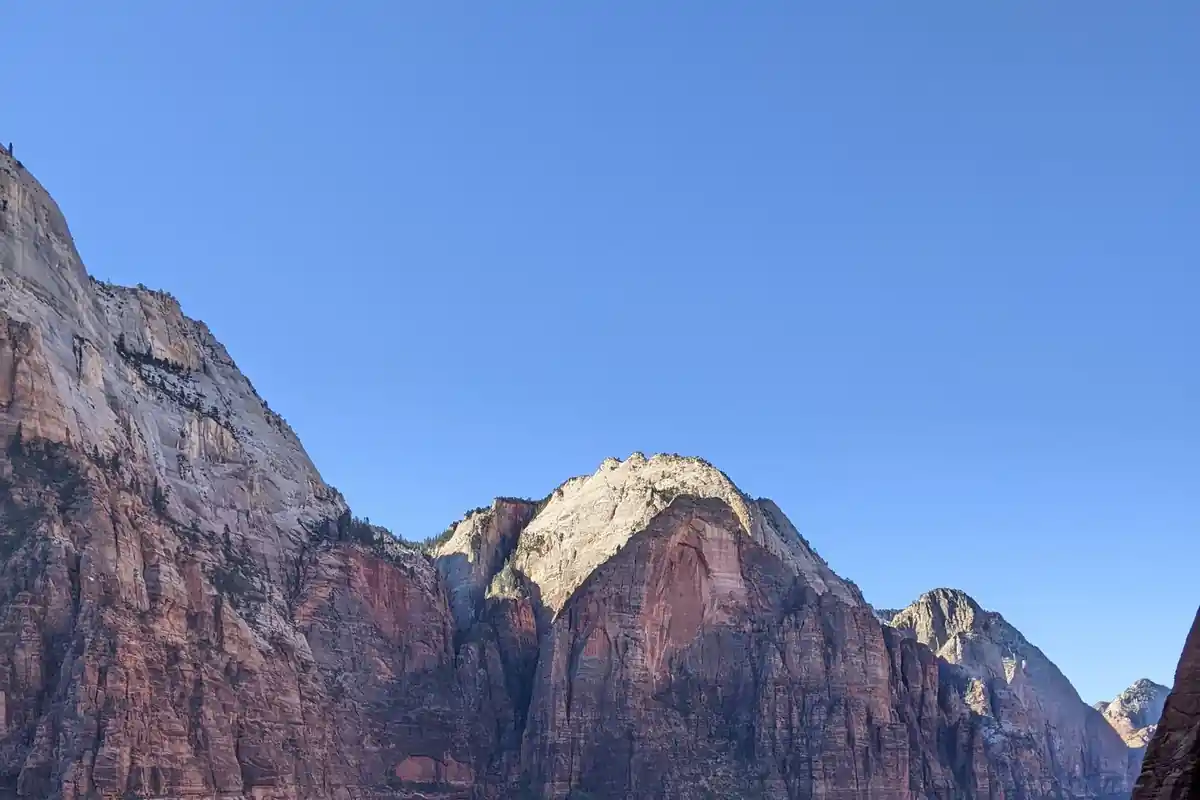
Most people try to see Utah’s five national parks too fast. They drive in, take three photos, drive out, and remember the parking lots better than the parks. It does not have to be that way. Seven days is not a lot for five parks, but with the right order and a few early starts, the trip can feel calm instead of rushed.
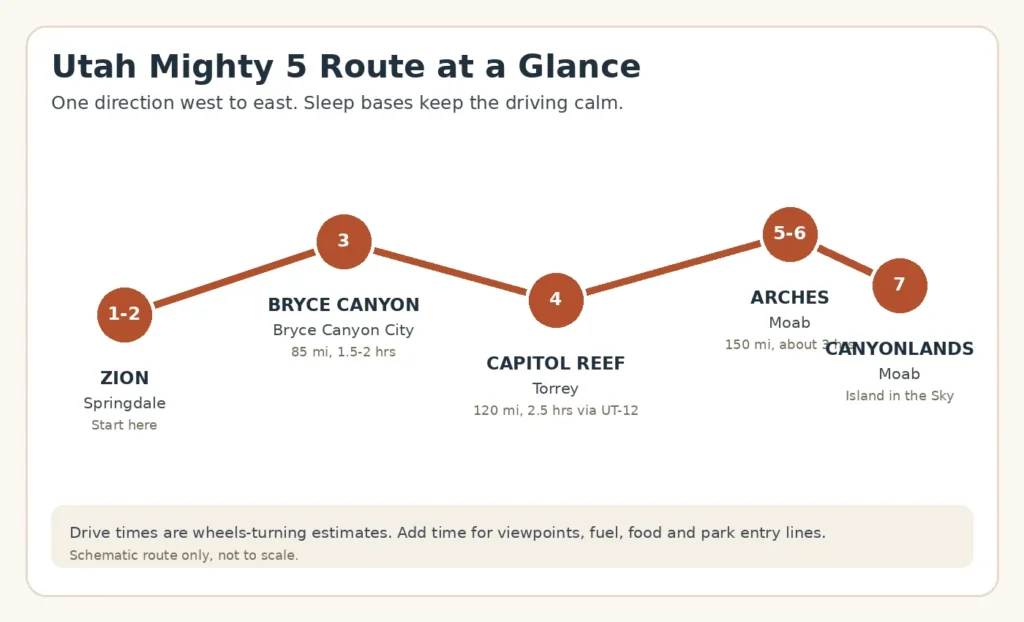
This Utah Mighty 5 road trip itinerary runs from Zion to Bryce Canyon, then Capitol Reef, then Arches, and ends in Canyonlands. It is the order many road trippers use because the driving flows in one direction and you do not double back over the same roads.
One thing to fix in your mind before day one. The parks look close on a map. They are not that close on the road. Plan for driving time between every stop, start early, and keep one slow morning in the trip. Your future self will thank you at the end of day five.
The 7 Day Route at a Glance
| Day | Park | Where to Sleep |
|---|---|---|
| 1-2 | Zion National Park | Springdale |
| 3 | Bryce Canyon National Park | Bryce Canyon City |
| 4 | Capitol Reef National Park | Torrey |
| 5-6 | Arches National Park | Moab |
| 7 | Canyonlands, Island in the Sky | Moab or drive home |
This order keeps the driving in one direction and avoids doubling back.
Utah Mighty 5 Road Trip Itinerary: The Honest Basics
The best months for this trip are April, May, September and October. Summer works too, but the desert parks get very hot and the famous trails get busy early. Winter is quiet and beautiful, mainly at Bryce Canyon, but short days and snow can change plans fast.
For all five parks in one trip, the America the Beautiful annual pass, around 80 dollars, usually works out cheaper than paying for each park on its own. Prices change, so check the official National Park Service page for each park before you pay for anything.
As of 2026, none of Utah’s five parks needs a timed entry booking just to enter the park. That is good news. But do not mix that up with activity bookings. Zion still needs a permit for the chained part of Angels Landing. Campgrounds and some ranger led activities can also fill up. Entry is simple this year, popular activities are not.
Driving Times and Where to Sleep
The driving is part of the trip, not a problem to hide. This route moves in one direction, so you are not paying for the same road twice. The longest change of base is the Capitol Reef to Moab day, and even that stays comfortable if you leave Torrey in the morning and stop only for fuel, food and one or two viewpoints.
Those times do not include park entry lines, photo stops, road works or weather. On UT 12 between Bryce and Torrey, add at least 30 to 60 minutes if you like viewpoints, because that road earns the stops. Book Springdale for two nights, Bryce Canyon City for one, Torrey for one, and Moab for three. That pattern gives you only three hotel changes after Zion and keeps the last two parks simple from one base.
What the Trip Costs at the Gate
Park entry is the easiest cost to predict. If you buy a separate private vehicle pass for each park, the standard 7 day prices checked for this guide are Zion $35, Bryce Canyon $35, Capitol Reef $20, Arches $30 and Canyonlands $30. That is $150 for one vehicle across the five parks.
For most US resident drivers, the $80 annual pass is the simple choice. It covers one private vehicle at these parks and lasts 12 months from purchase. Since January 2026, nonresidents should check the current nonresident fee rules on the official park pages before travel, because Zion and Bryce Canyon are part of the newer nonresident fee system. Prices and rules can change, so confirm on the National Park Service entrance fee page close to your trip. Keep fuel, food and lodging separate in your budget. Those change too much by season to promise one honest number here.
Day 1 and Day 2: Zion National Park
Give Zion two days if you can. One day in Zion almost always feels short.
Start day one with the canyon shuttle and do the easy, classic stops first. Riverside Walk is flat and simple, and it also shows you the start of The Narrows. Emerald Pools is a good family walk, with shade in parts and no scary edges. If your group is new to hiking, this is the right speed for a first day.
On day two, pick your one big Zion experience. For strong hikers with a permit, that can be Angels Landing. For most people, a partial Narrows walk is the better memory. You walk in the river, between tall canyon walls, and you can turn back whenever you like. That freedom is why The Narrows works for so many visitors.
A small warning that matters. The water in The Narrows is cold, even on a hot day. Rent proper river shoes and a walking stick in Springdale if you do not own them. Normal trainers get slippery and your day ends early. Also check the flash flood forecast at the visitor centre before any canyon hike. If the risk is high, change the plan. No photo is worth that risk.
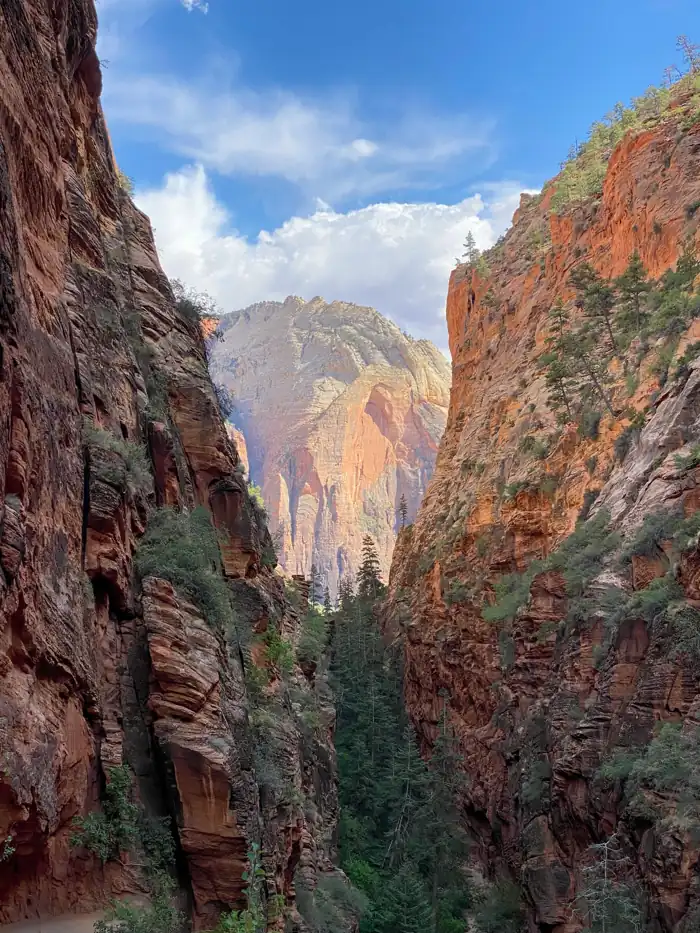
Stay both nights in Springdale. It sits right outside the park entrance, food is easy to find, and you can enter the park early without a long morning drive.
If you only pick two Zion walks: make one of them a river or canyon floor walk, such as Riverside Walk toward The Narrows, and the other a higher view, such as Canyon Overlook or Scout Lookout on the way toward Angels Landing. That gives you the two sides of Zion in two days without trying to hike every trail in the park.
Day 3: Bryce Canyon National Park
The drive from Zion to Bryce Canyon takes you up in height, and you feel it. Bryce sits high, mornings are cold, and the light is the whole show here. Try to reach Sunrise Point or Sunset Point early. The orange rock towers, called hoodoos, light up in a way that midday sun just flattens out.
If you do only one hike in Bryce, make it the Navajo Loop with Queen’s Garden. It takes you down among the hoodoos, and from below, the place looks completely different from the rim. The climb back up is steep in parts. Take water even for this short hike, because the height makes people tired faster than they expect.
You can see the main Bryce viewpoints in one full day. Stay the night near Bryce Canyon City, or start the drive toward Capitol Reef in the late afternoon if you want a head start.
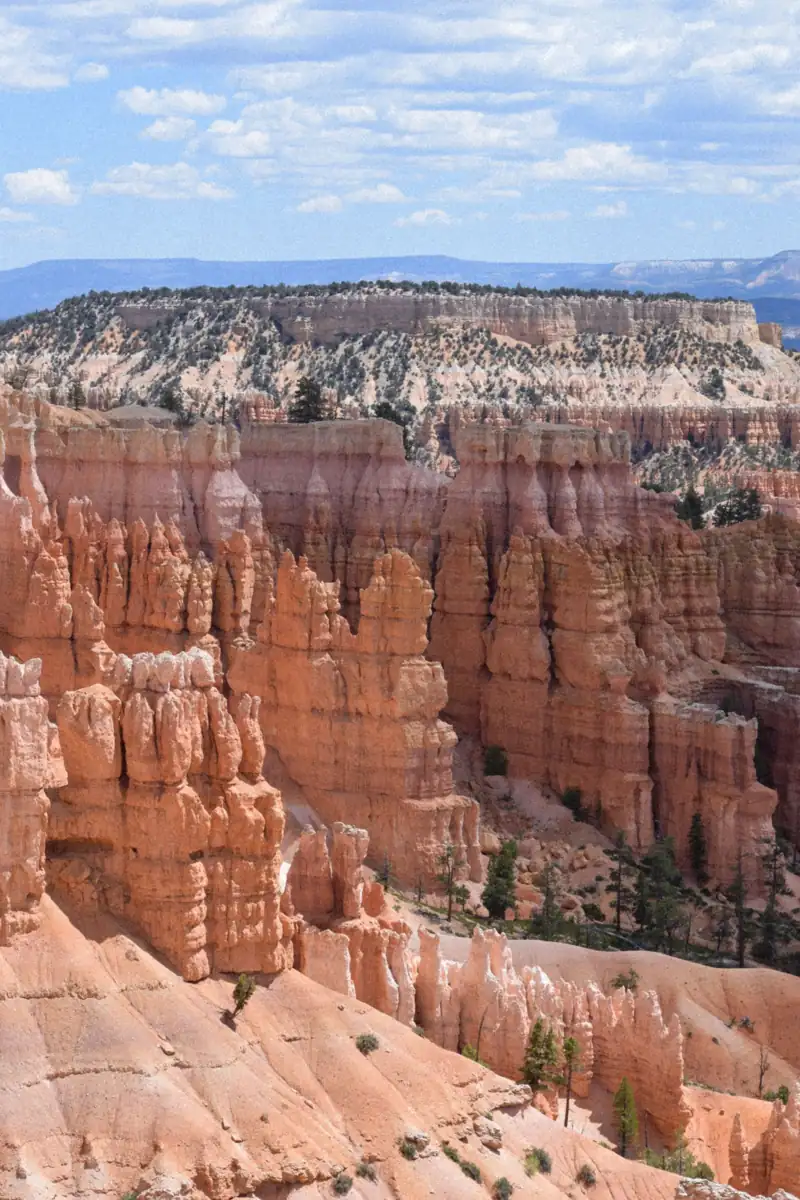
The one Bryce walk that matters: go below the rim. Sunrise at the rim is beautiful, but the park changes once you walk down among the hoodoos on the Queen’s Garden and Navajo Loop area. Give that walk the cool part of the morning, then use the afternoon for the drive toward Torrey and the viewpoints on UT 12.
Day 4: Capitol Reef National Park
Capitol Reef is the park people rush past, and it is often the one they talk about later. It is quieter. There is no big crowd at the gate. The scenic drive passes red cliffs, the old Fruita settlement, orchards and petroglyph panels, and the whole place moves at a slower speed.
Do the scenic drive in the morning. Stop at Fruita, walk a little, and read the history boards. Then pick one hike. Hickman Bridge is the popular choice and it earns it, a large natural bridge, a clear trail, and views that open up as you climb.
This is also a good day to slow down on purpose. By day four of desert driving, everyone is a little tired. A quiet park day now will save the last three days of your trip.
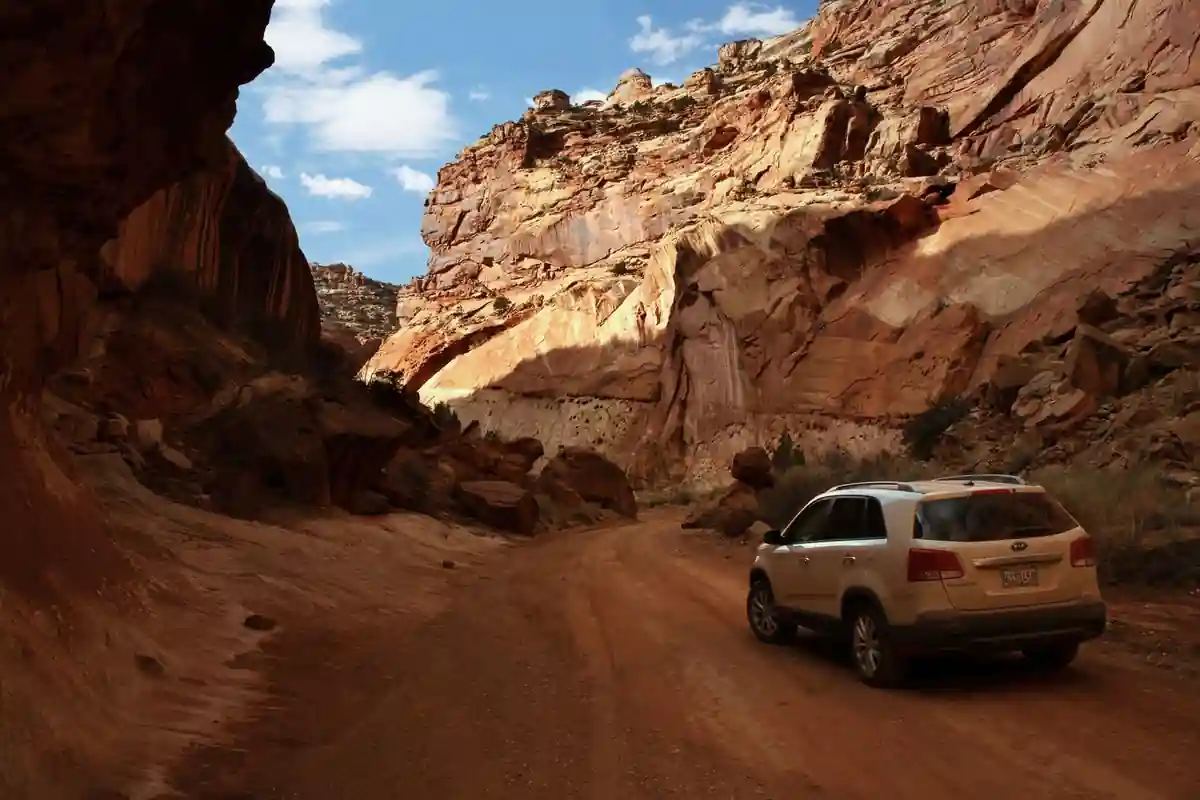
Stay the night in Torrey, a small town right by the park. Book that night early in peak months, rooms are limited.
Do not treat Capitol Reef as only a drive through. Pick one walk, such as Hickman Bridge or Grand Wash, then add the Fruita area for orchards, the historic schoolhouse and a slower lunch stop. Capitol Reef is the calm middle of this route, and it works best when you let it be calm.
Day 5 and Day 6: Arches National Park
Base yourself in Moab for the next two days. Arches and Canyonlands are both close to Moab, so one base means no packing and unpacking every night.
In 2026, Arches does not use a timed entry system. You can enter when the park is open. But read that the right way. No booking does not mean no crowd. The park itself advises visitors to arrive early, stay flexible, and move to a less busy area if a car park is full. Delicate Arch at midday in peak season is not a calm experience.
Day five plan for Arches: enter early, do Park Avenue and the Windows Section in the cool part of the day, take a break in Moab during the heat, then go back for Delicate Arch in the late afternoon. The light is better, the rock glows, and the hike up feels less hard than at noon. Carry more water than you think you need. There is almost no shade on that trail.
Day six can be your second Arches morning for Double Arch and Landscape Arch, then keep the afternoon easy. You have one more park tomorrow, and it rewards an early start.
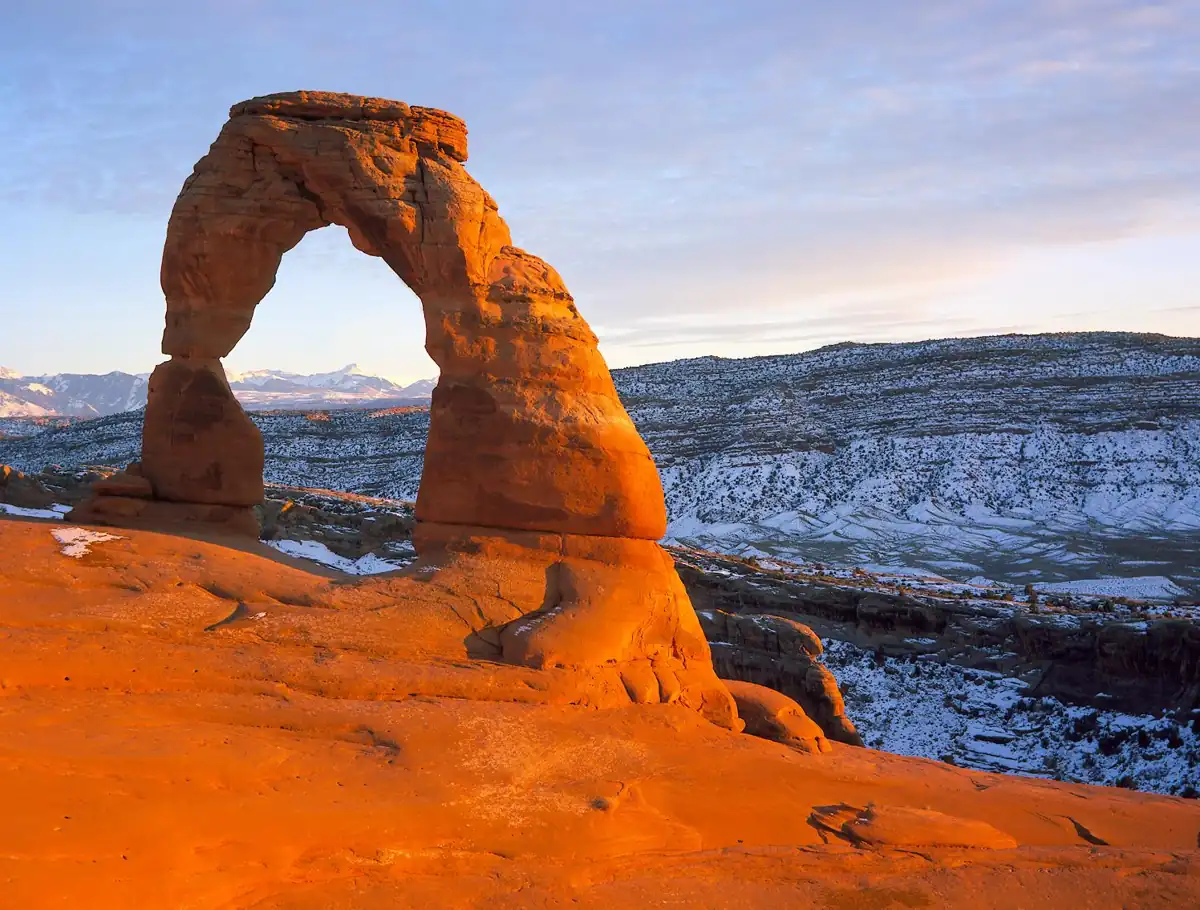
Split Arches into two moods. Use one visit for Delicate Arch in softer late light, and the other for the Windows, Double Arch, Balanced Rock and Park Avenue in the morning. In hot months, be back in Moab for the middle of the day. Arches rewards early starts more than long midday effort.
Day 7: Canyonlands, Island in the Sky
End the trip at the Island in the Sky side of Canyonlands. Go for sunrise at Mesa Arch. Yes, it is famous. Yes, other photographers will be there. It still earns its name. The sun comes up under the arch and the canyon below lights up step by step. Arrive in good time, find your spot, and stay quiet. Sunrise people are serious people.
After that, drive the scenic road to Grand View Point and stop at the viewpoints on the way back. Island in the Sky gives you the big, wide Utah ending. One day is enough for this side of the park on a first trip.
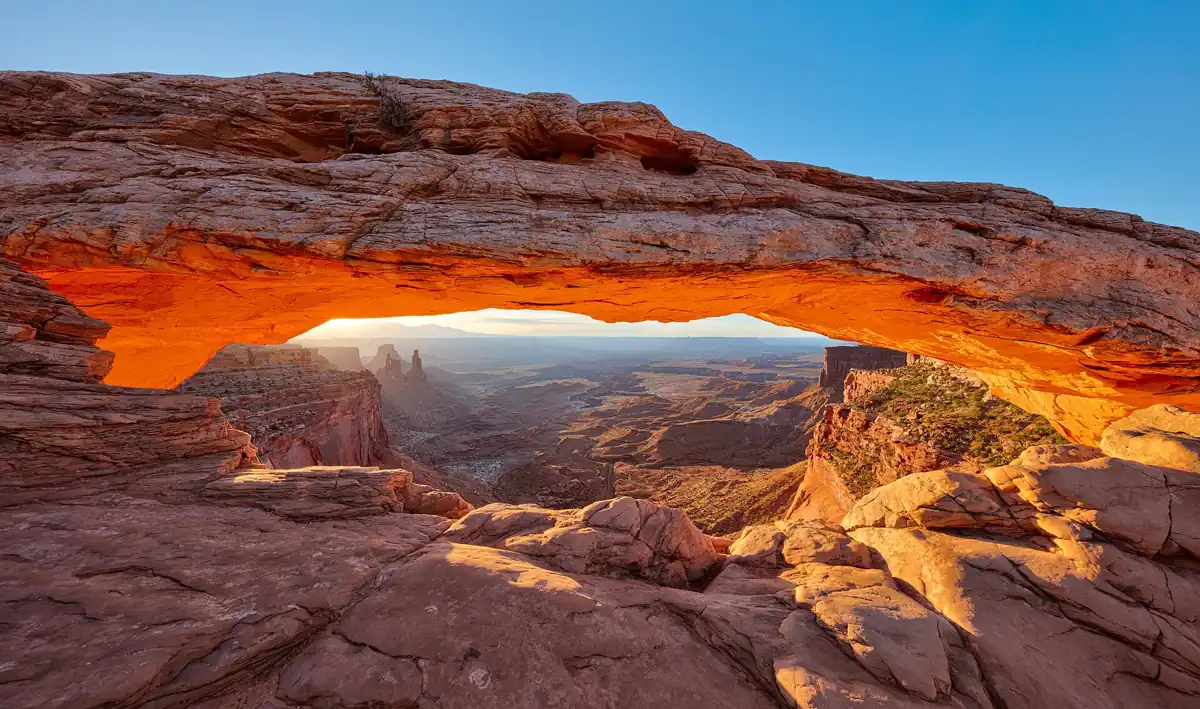
Start Canyonlands at Mesa Arch, then slow down. After sunrise, take the Island in the Sky road to Grand View Point and choose one shorter walk, such as Aztec Butte or the first part of the White Rim Overlook side trails, instead of racing every viewpoint. The scale of Canyonlands lands better when you stop long enough to look.
Simple rules that will save this trip
Start hikes early. Carry water in the car at all times, not only on the trail. Download your maps before you lose phone signal, because signal drops in long stretches between parks. And check each park’s official alerts page the night before. Road work, trail closures and weather warnings change, and the park service page is the only source that counts.
Seven days, five parks, one direction. Do not try to see everything. Pick one big experience per park, start early, and leave a little room for the stop you did not plan. That is the version of this trip people come home happy about. For more help, see our Trip Planning guides.
Quick questions people ask
How many days do you really need for the Mighty 5?
Seven days is the minimum that feels good. Ten days is better if you like long hikes or slow mornings.
Which park needs the most time?
Zion. It has the deepest list of famous trails, and one day there almost always feels short.
Which park can be done in one day?
Bryce Canyon, Capitol Reef and the Island in the Sky side of Canyonlands can each be enjoyed well in one day on a first trip.
Do I need to book park entry in 2026?
For Utah’s five parks, no timed entry booking is needed just to enter in 2026. But Angels Landing permits, campgrounds and some activities still need booking, and rules can change. Always confirm on the official park page before your trip.
What is the best month for this road trip?
April, May, September and October give the best mix of weather and smaller crowds.
Photo Credits and Sources
Pexels photos are free to use under the Pexels license. The Delicate Arch image is public domain via Wikimedia Commons (National Park Service). Mesa Arch photo by Thomas Wolf, www.foto-tw.de, CC BY-SA 3.0 via Wikimedia Commons, resized and converted to WebP.