
The Narrows for Beginners
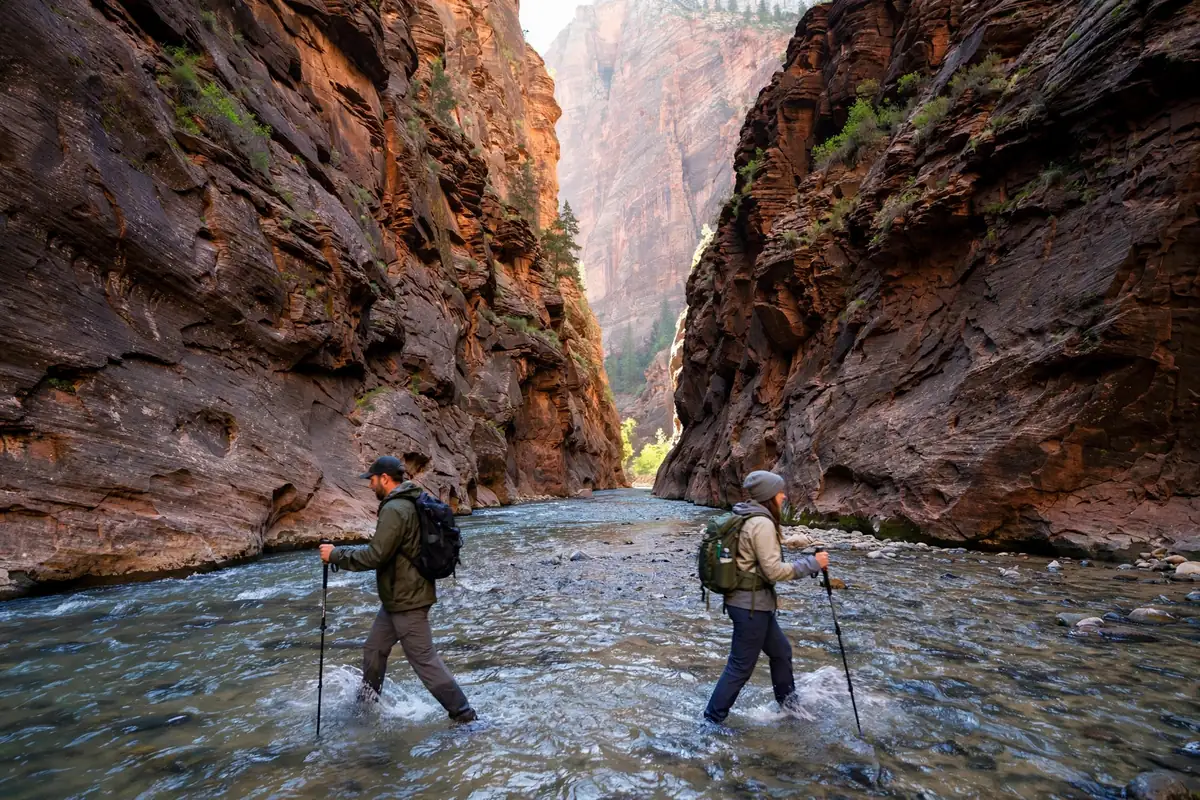
The Narrows is the most unusual hike in Zion National Park. Instead of walking on a trail, you walk in a river, between canyon walls that rise a thousand feet straight up while the Virgin River squeezes through gaps as narrow as 20 feet. It sounds extreme, but the beginner version of this hike is one of the most accessible adventures in Utah: no permit needed, no technical skill required, and you can turn back whenever you like. For current conditions, closures, and flow limits, check the NPS page for The Narrows before you go.
This guide covers everything a first-timer needs: which version of the hike to choose, how far to go, what gear actually matters, and how to read the water conditions before you step in. If you are building a wider trip, our one day in Zion itinerary shows how the Narrows fits into a single full day in the park.
Current conditions note (17 Oct 2026): the Virgin River is flowing around 106 to 109 cfs, which is below the 150 cfs closure limit, so the Narrows is open. That flow sits in the 70 to 150 range though, which the park service calls challenging wading. Expect thigh-deep crossings and a real workout against the current. Always recheck the flow on the morning of your hike, because one storm can change everything.
Which Narrows Hike Is Right for You?
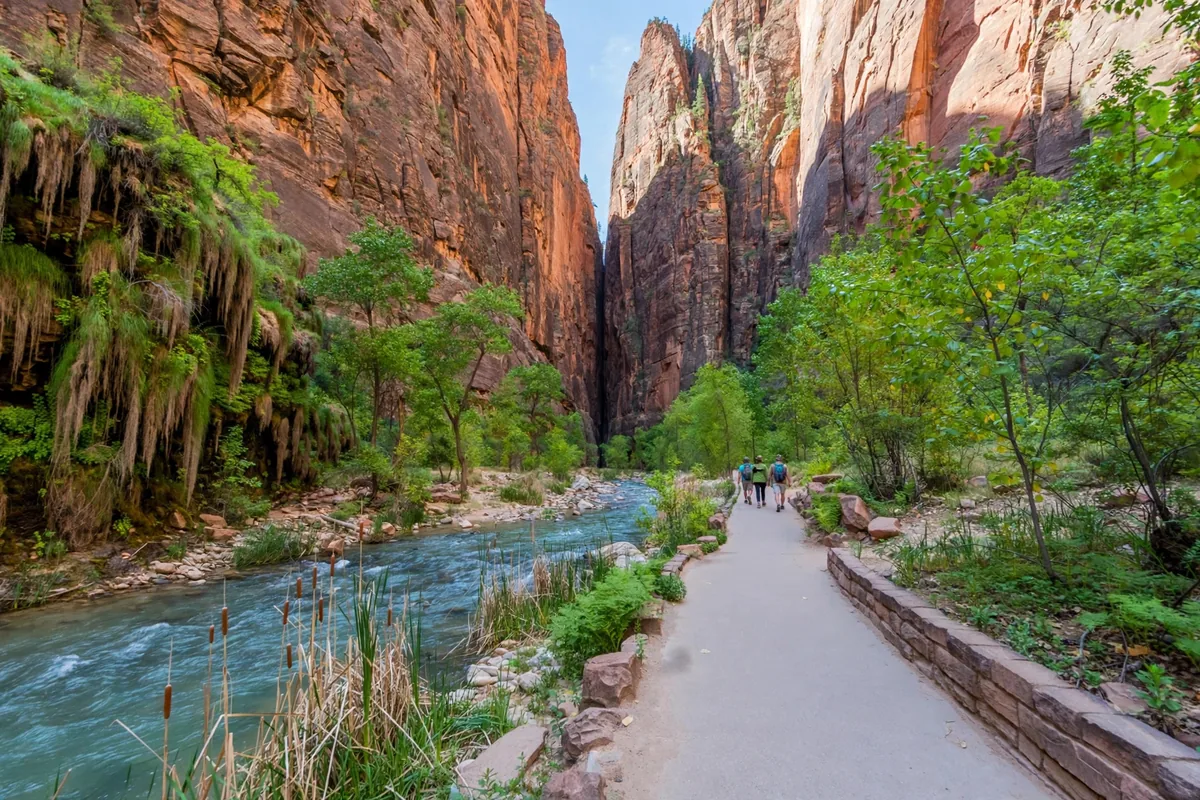
There are three ways to experience the Narrows. Most beginners want the middle one.
| Option | Distance | Permit | Best for |
|---|---|---|---|
| Riverside Walk only | 2.2 miles round trip, paved | None | Anyone who wants the views without getting wet. Wheelchair accessible. |
| Bottom-up day hike | You choose: 1 hour to all day (up to ~9.4 miles round trip) | None | Most first-timers. Wade as far as you like, then turn around. |
| Top-down through-hike | 16 miles one way | Wilderness permit required | Experienced hikers with a full day and a shuttle plan. |
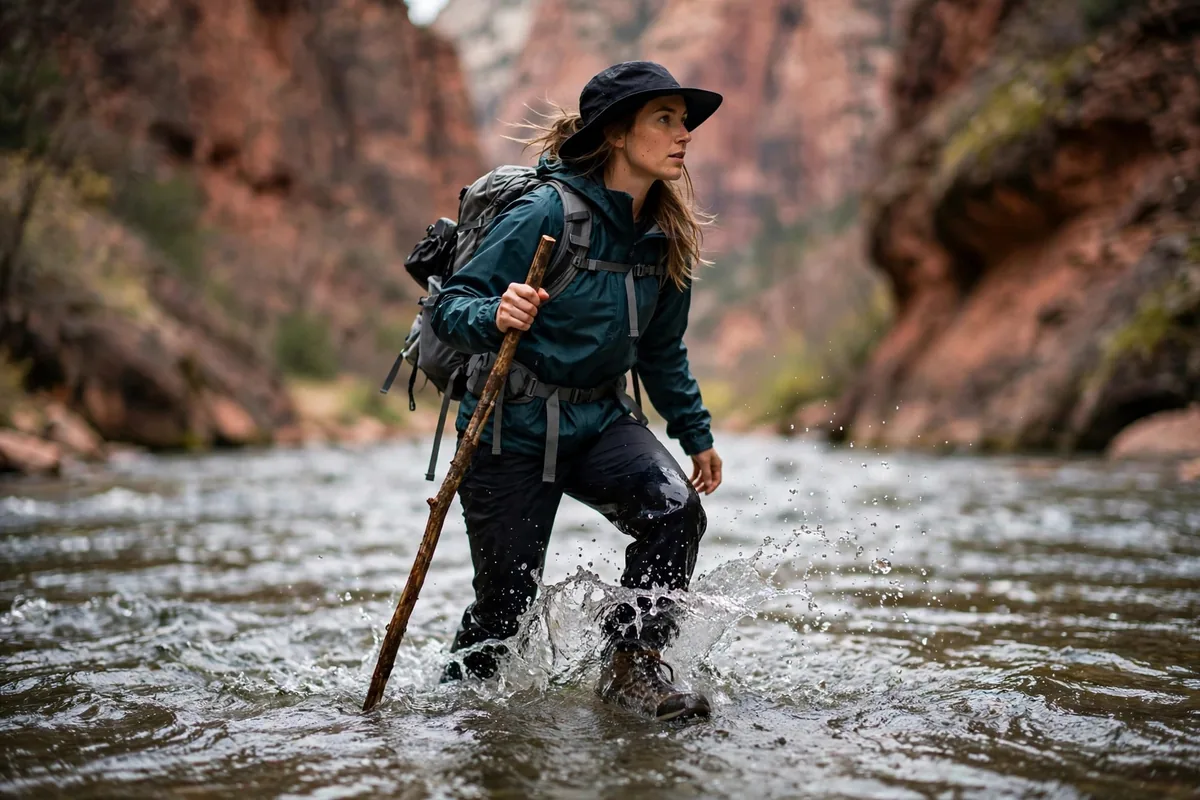
The bottom-up hike is the classic beginner choice and the focus of this guide. You start where the paved Riverside Walk ends, step into the river, and walk upstream for as long as you enjoy it. There is no destination you must reach. The canyon gets narrower and more dramatic the farther you go, so even a one-hour taste delivers the essential experience.
Do You Need a Permit?
For the bottom-up day hike, no permit is required, all the way up to Big Spring. You simply show up and start walking. This surprises a lot of visitors because Zion’s other famous hike, Angels Landing, runs on a lottery system. If you entered that lottery and did not get a slot, the Narrows is the perfect backup plan. Our Angels Landing permit guide explains what to do when the lottery does not go your way, and the Narrows tops that list.
The only Narrows hike that needs a permit is the 16-mile top-down through-hike from Chamberlain’s Ranch, which requires a Zion wilderness permit. Day hikers going bottom-up never need one.
How Far Should You Go? The Turnaround Ladder
Think of the bottom-up hike as a ladder. Each rung takes you deeper into the canyon, and you can stop at any rung with zero shame. Roughly half of all hikers turn back within the first two rungs, and they still call it a highlight of their trip.
Rung 1: The one-hour taste (about 1 mile in)
Wade in past the end of the Riverside Walk and keep going for 30 to 45 minutes. You will pass Mystery Falls, a weeping wall draped in hanging gardens, and the canyon walls will already be closing in. Turn around, walk back downstream (much faster), and you are done in about 2 hours total. This is the right choice if you are short on time, hiking with small kids, or just want to say you did it.
Rung 2: Half day to the Orderville Canyon junction (about 2.5 miles in)
Keep walking past the first hour and the crowds thin out fast. Around 2.5 miles in, Orderville Canyon joins from the right, a beautiful side canyon worth a short detour. Plan on 4 to 5 hours round trip. This is the sweet spot for most beginners: real slot canyon scenery without an exhausting day.
Rung 3: Wall Street (about 3 miles in)
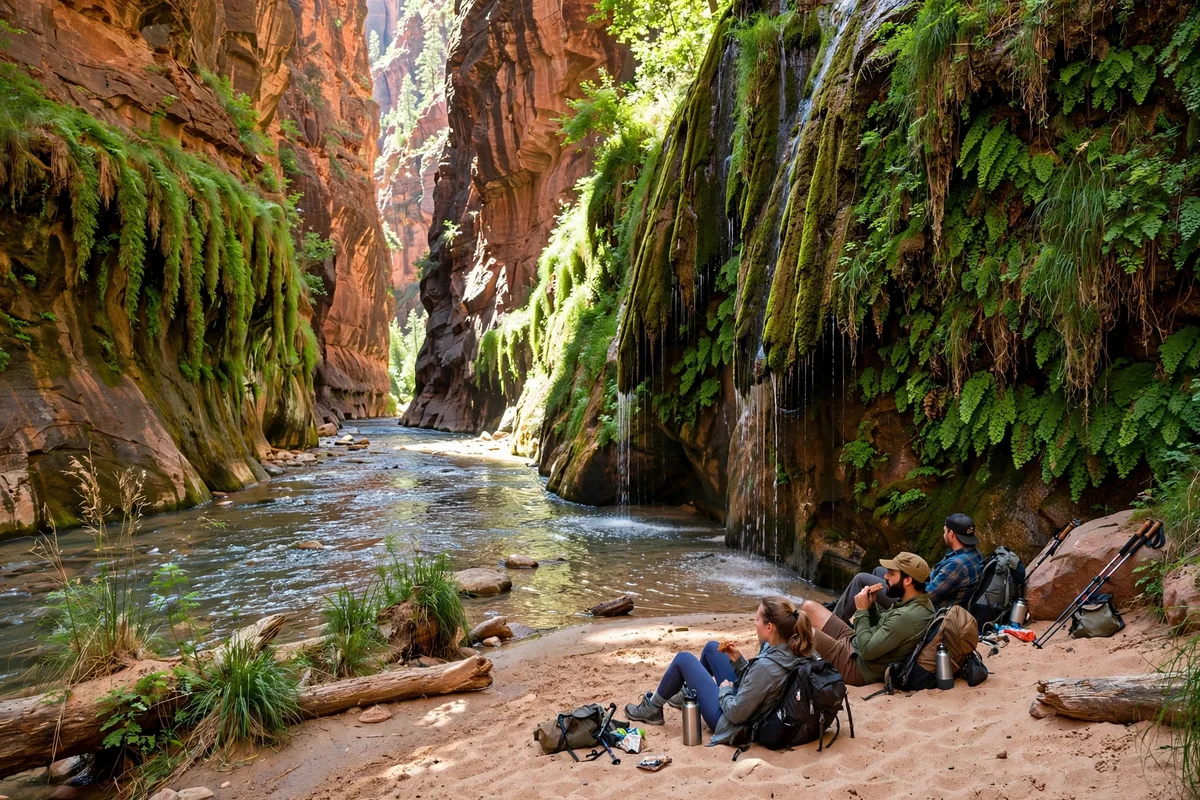
Just past Orderville, the canyon squeezes into its most famous stretch. Wall Street is the section you have seen in photos: sheer walls, a thin strip of sky, water the color of glass. It is only about half a mile past the Orderville junction, so if you made it to rung 2 feeling good, keep going. Round trip runs 5 to 6 hours.
Rung 4: Big Spring, the full day (about 4.7 miles in)
Big Spring is as far as day hikers can go without a permit, roughly 9.4 miles round trip and a genuine all-day effort of 8 to 10 hours. The water gets deeper in places, chest-deep pools are possible at higher flows, and you will be tired on the way back. Save this for a day when the flow is low, the weather is stable, and you started early.
The golden rule: the hike out is always easier than the hike in, because you are walking downstream. But tired legs on slippery rocks cause most Narrows injuries, so turn back when you are at about 60 percent of your energy, not 90.
Gear That Actually Matters
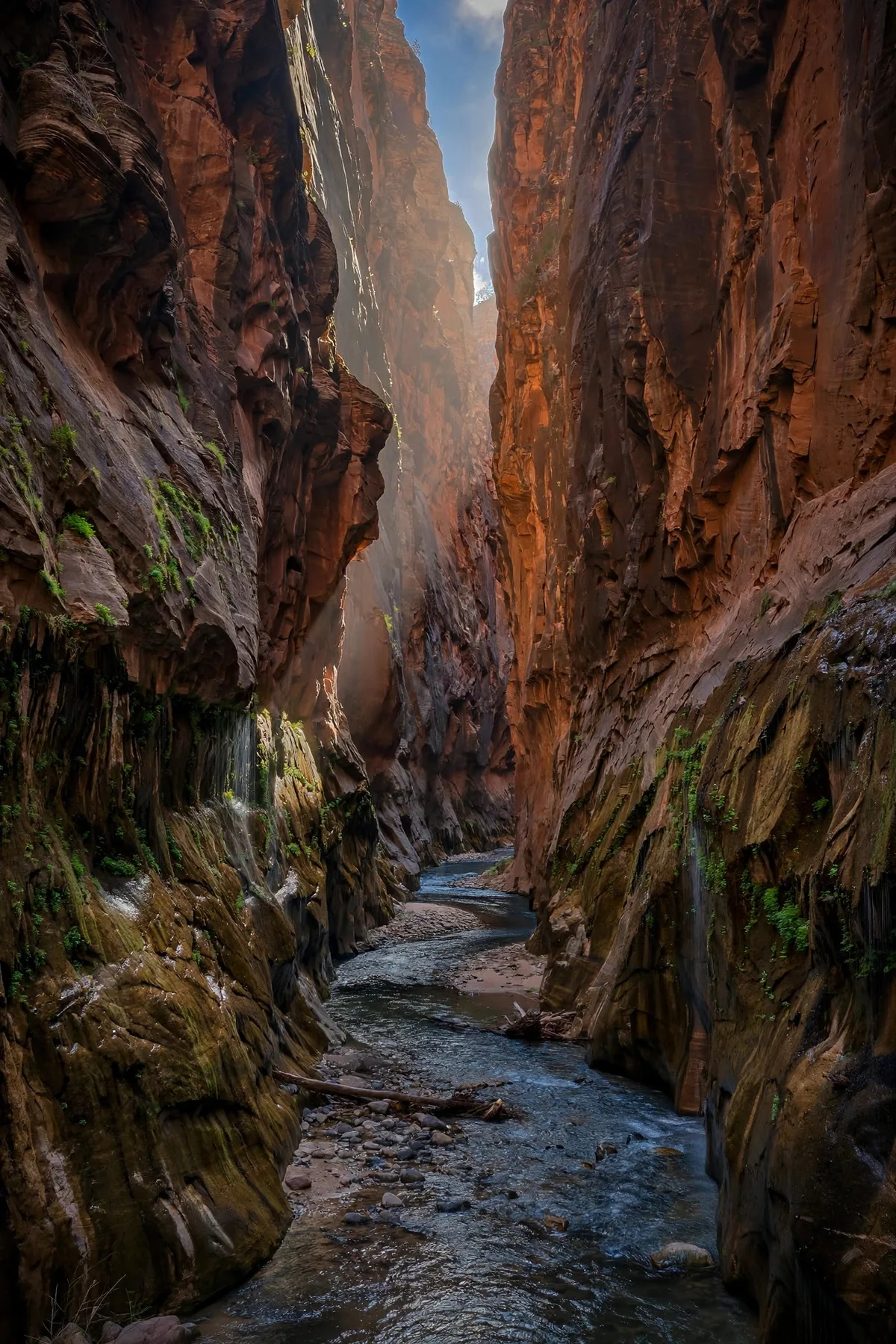
You do not need much, but the few things you need are non-negotiable. Here is the honest breakdown of what to rent and what to bring.
| Item | Rent in Springdale | Bring yourself |
|---|---|---|
| Sturdy closed-toe shoes | Yes, canyoneering boots with grip | Only if they are broken-in hiking boots you trust on wet rock |
| Neoprene socks | Yes, cheap and worth it | Wool hiking socks as backup |
| Walking stick | Yes, the single most useful item | Trekking poles work too |
| Quick-dry layers | Wetsuit or dry pants in cold months | Synthetic or wool layers, never cotton |
| Dry bag | Usually included with rentals | A zip-lock for your phone at minimum |
Rental shops in Springdale open early and the whole package typically costs less than a tank of gas. In October and colder months, add the wetsuit or dry pants option. Mid-October water runs cold enough that bare legs go numb faster than you expect, and numb feet on bowling-ball rocks are how ankles get twisted.
What not to wear: sandals, crocs, or bare feet are not appropriate and the park service says so bluntly. They lead to twisted ankles and crushed toes on the uneven riverbed. Cotton is the other mistake. It stays wet, pulls heat from your body, and hypothermia is a real risk even when the air temperature feels warm. For the full clothing checklist, see our desert parks packing list.

Water and Weather: Reading the River Before You Go
The Narrows is a river hike, so the river makes the rules. The park service closes the Narrows when the Virgin River flow tops 150 cubic feet per second (cfs), and it also closes during any National Weather Service flash flood warning, staying shut for at least two hours after the warning lifts.
Flow is not just open or closed though. It changes how hard the hike feels:
| Flow (cfs) | What it feels like |
|---|---|
| Below 70 | Moderately difficult. Knee-deep crossings on slippery rock, some waist-deep pools. |
| 70 to 150 | Challenging. Fighting the current upstream, frequent thigh-deep crossings, possible chest-deep pools. |
| Above 150 | Closed. No entry. |
Check the USGS gauge reading on the morning of your hike and ask a ranger at the visitor center about the flash flood potential rating. Afternoon thunderstorms can hit any month, and in a slot canyon the river can double or triple in volume frighteningly fast. If the sky looks threatening, stay out. No hike is worth that risk.
Water temperature matters as much as flow. The park service flags hypothermia as a top danger, even in summer:
| Season | Water temp | What it means |
|---|---|---|
| Summer | 56 to 68 F | Refreshing. Most hikers are fine in shorts and a t-shirt. |
| Spring and fall | 41 to 53 F | Cold. Neoprene socks at minimum; consider a wetsuit. |
| Winter | 38 to 45 F | Wetsuit or drysuit required. This is expert-season hiking. |
One more water rule: do not drink the river water untreated, and do not submerge your head. The park warns about toxic cyanobacteria in the Virgin River. Carry your drinking water from the fill stations at the Temple of Sinawava.
Getting There
Ride the Zion Canyon shuttle to the last stop, the Temple of Sinawava (Stop 9). From there, the paved Riverside Walk follows the river for one mile to the spot where the pavement ends and the wading begins. Use the restrooms at the shuttle stop before you start. There are no toilets in the Narrows, and whatever you pack in, you pack out.
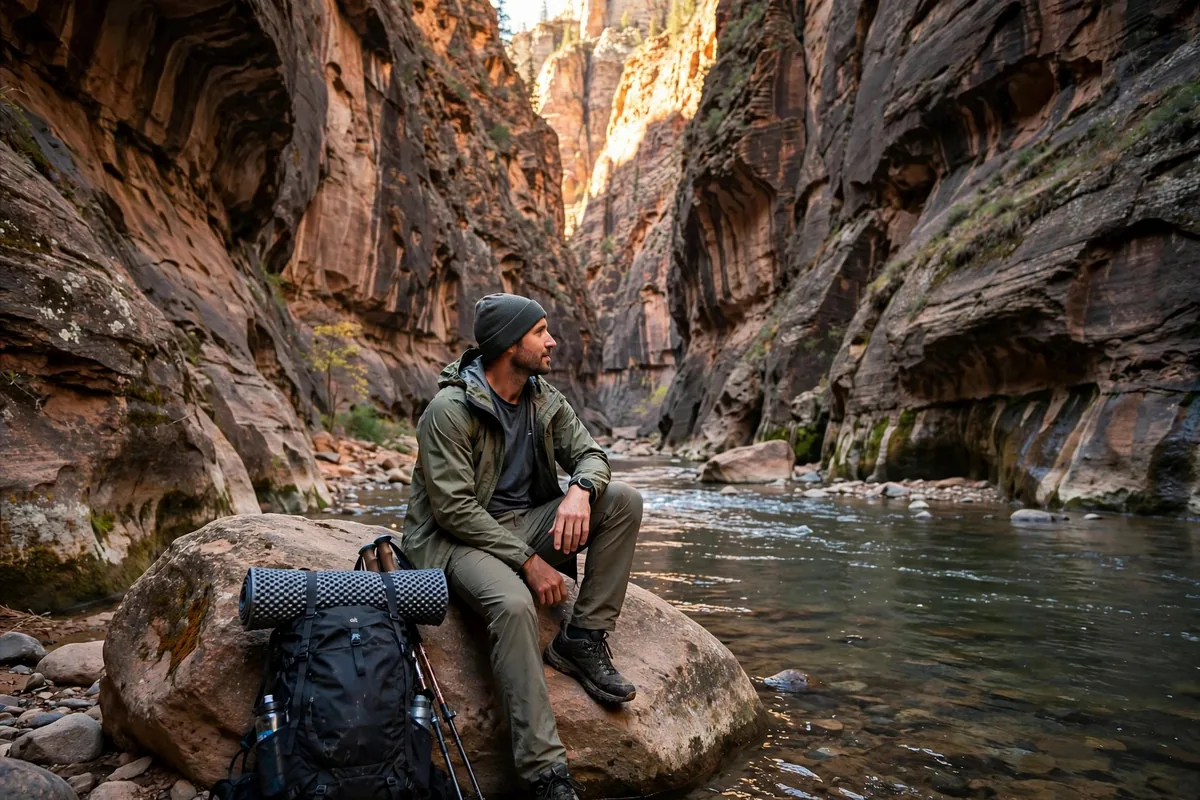
If you need rental gear, stop in Springdale before entering the park. The outfitters open early, the staff will size you in minutes, and they will tell you honestly whether today’s flow suits a beginner. That local read on conditions is worth more than any forum post.
When to Go: Month by Month
| Month | Conditions | Verdict |
|---|---|---|
| Apr to May | Snowmelt often pushes flow over 150 cfs; closures common | Risky, check daily |
| Jun | Runoff recedes, flow drops, water still brisk | Good |
| Jul to Sep | Lowest water, warmest temps, but afternoon monsoon storms | Great, watch the sky |
| Oct | Stable weather, cool water, shorter days | Great with warm layers |
| Nov to Mar | Cold water, possible ice, wetsuit or drysuit needed | Experts only |
Late spring through early fall is the main window, with fall offering the most stable weather. For the bigger seasonal picture across all five parks, our month by month guide to Utah’s national parks breaks down crowds, prices, and weather park by park.
What It Costs
The hike itself is free beyond park entry. Zion charges the standard national park entrance fee per vehicle, valid for seven days. The only real extra cost is gear rental in Springdale, which runs roughly twenty to fifty dollars per person depending on the package and season. A walking stick alone is the cheapest and highest-value rental if you are packing light.
Frequently Asked Questions
Can kids hike the Narrows?
Yes, and it is one of the best kid hikes in the park system. Stick to rung 1 of the turnaround ladder, keep the outing under two hours, and put the sturdiest shoes you own on their feet. Kids love the splashing part far more than the distance part. Skip it on days when the flow is above 70 cfs.
Are there sections where you have to swim?
On the bottom-up route, no. At normal flows you wade the whole way, though pools can reach waist or chest depth at higher flows. The top-down route has a couple of short swims in most years. If you cannot swim, stay on the bottom-up route and turn back before any pool looks intimidating.
Can I bring my dog?
No. Dogs are not allowed on the Riverside Walk or in the Narrows. They are only permitted on the Pa’rus Trail and in developed areas of the park.
Can you hike the Narrows in winter?
Technically yes, with a wetsuit or drysuit, warm layers, and experience reading winter conditions. For beginners, winter is the wrong season. The water sits near 40 degrees, daylight is short, and a slip that would be funny in July becomes dangerous in January.
Is the water safe to drink?
No. Treat it or carry your own. The park also warns against submerging your head because of cyanobacteria. Fill your bottles at the Temple of Sinawava before you start.
How long does the average visit take?
Most first-timers spend 2 to 4 hours total, including the Riverside Walk. That covers rung 1 or 2 of the turnaround ladder with time to linger. The full day to Big Spring is a different trip that deserves its own early start.