
One Day in Zion National Park: A Realistic Itinerary

One day in Zion National Park is enough to fall for the place and not nearly enough to see all of it. The trick is working with the park’s layout instead of against it. Zion Canyon runs on a shuttle system for most of the year, the best short hikes sit along one road, and the famous big hikes demand more time than a single day allows. This itinerary is built around that reality: an early start, the shuttle, two or three well chosen hikes, and a scenic drive to close the day. If you are still deciding when to come, read our guide to the best time to visit Utah’s national parks before you lock in your dates.
Current trail closures: Hidden Canyon is closed, and the Watchman Trail is closed too, with no confirmed reopening date, so Observation Point cannot be reached from Zion Canyon. On the good news side, Weeping Rock Trail reopened in September 2025 and is open now, so a short paved walk to a dripping alcove is still on the table.
How the Zion Shuttle Shapes Your Day
Almost everything about a one day visit starts with the shuttle. The Zion Canyon shuttle is free, and you do not need a ticket, reservation, or permit to ride it. You do need to pay the park entrance fee. For the 2026 season, both the Zion Canyon line and the Springdale town line run from March 7 through November 28, with no service from November 29 through December 25 and a short holiday schedule from December 26 to January 2. While the shuttle is running, private vehicles are not allowed on the Zion Canyon Scenic Drive at all, so the shuttle is not optional. It is the only way up the canyon.
The practical details matter. The first shuttle leaves the Zion Canyon Visitor Center at 7 a.m. during the main season, and shuttles arrive every five to ten minutes. The ride from the Visitor Center to the Temple of Sinawava at the far end takes about 45 minutes each way. The last shuttle out of the canyon leaves the Temple of Sinawava at 7:15 p.m. for most of the season, stretching to 8:15 p.m. in peak summer and shrinking to 6:15 p.m. in late fall. If you miss that last shuttle or it fills up, you could be walking back to the Visitor Center, which is eight miles or more. Missing the last shuttle is one of the classic Mighty 5 road trip mistakes, and it is completely avoidable if you plan your return trip before you head up the canyon. Check the official 2026 shuttle schedule on nps.gov before your trip, since the park notes that schedules are subject to change.
One more shuttle season reality: parking inside the park fills early, even on weekdays. If the lots are full when you arrive, drive into Springdale, park there, and ride the free Springdale shuttle line to the park’s pedestrian entrance. It adds a few minutes and saves a lot of circling.
Your One Day Timeline at a Glance
This is the full day in one view. Details for each block follow below.
| Time | Plan |
|---|---|
| 7:00 a.m. | Arrive at the Zion Canyon Visitor Center and catch an early shuttle up the canyon |
| 7:30 to 10:00 a.m. | Riverside Walk to the Narrows entrance, with a short wade into the river if conditions allow |
| 10:30 a.m. to 12:00 p.m. | Lower Emerald Pools trail, then lunch at Zion Lodge |
| 1:00 to 4:00 p.m. | Afternoon hike: Canyon Overlook Trail or Watchman Trail |
| 4:30 to 6:00 p.m. | Zion-Mount Carmel Highway scenic drive by car, or a relaxed shuttle ride back down the canyon |
| Evening | Dinner in Springdale |
Morning: Riverside Walk and a Taste of the Narrows
Ride the shuttle all the way to the last stop, the Temple of Sinawava, and start with the Riverside Walk. This is a paved, nearly flat 2.2 mile round trip trail that follows the Virgin River as the canyon walls close in around you. It is the easiest walk in the park and one of the most beautiful, and it ends exactly where the Narrows begin. That makes it the perfect first hike of the day: you see the famous slot canyon entrance without committing to a full river hike.

At the end of the paved trail, you can wade a short way into the Virgin River for a real taste of the Narrows experience. The water is cold even in summer, the riverbed is rocky, and conditions change with the weather, so check the day’s flow conditions and only go as far as feels comfortable. Here is the permit situation in plain terms: hiking the Narrows upstream from the Temple of Sinawava toward Big Spring needs no permit. A permit is only required if you continue past Big Spring or hike the full top down route. Outfitters in Springdale rent canyoneering boots, neoprene socks, and dry pants, which make the wading far more comfortable. A full Narrows guide is coming as a separate article, since that hike deserves its own deep dive.
Midday: Lower Emerald Pools
Ride the shuttle back down to stop five, Zion Lodge, for the Lower Emerald Pools trail. This is a 1.2 mile round trip walk with about 70 feet of elevation gain, and most people finish it in about an hour. The trail leads to a pool sitting under a desert alcove, and in spring or after rain a waterfall pours over the lip. In late summer the falls can shrink to a trickle, which is worth knowing so your expectations match the season.
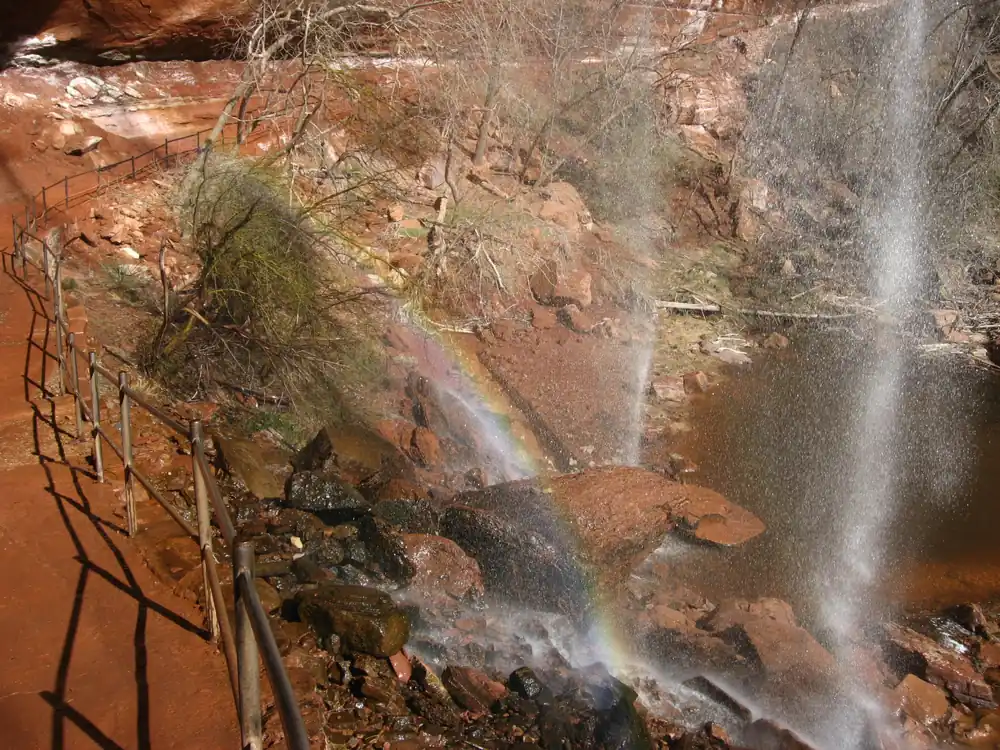
The trail starts right across from Zion Lodge, which makes this the natural lunch stop of the day. The lodge has a restaurant and a snack bar, plus water filling stations and restrooms. Eat, refill water, and rest your legs, because the afternoon hike is the one with the real climb.
Afternoon: Choose Your Big View
You have time for one proper afternoon hike, so pick the one that fits your energy and your transport. These are the two best options for one day in Zion National Park, and they could not be more different.
Canyon Overlook Trail is the short one with the huge payoff. It is one mile round trip with about 163 feet of climbing, and it ends at an overlook with a sweeping view down Zion Canyon. The catch is the location: the trailhead sits on the east side of the park along the Zion-Mount Carmel Highway, past the tunnel, and it is not served by the shuttle. You need your own car, and the small parking lot fills fast, so go earlier in the afternoon rather than later. The drive itself is part of the reward. The highway climbs through the historic tunnel, and the tunnel’s gallery windows frame the canyon like pictures on a wall.

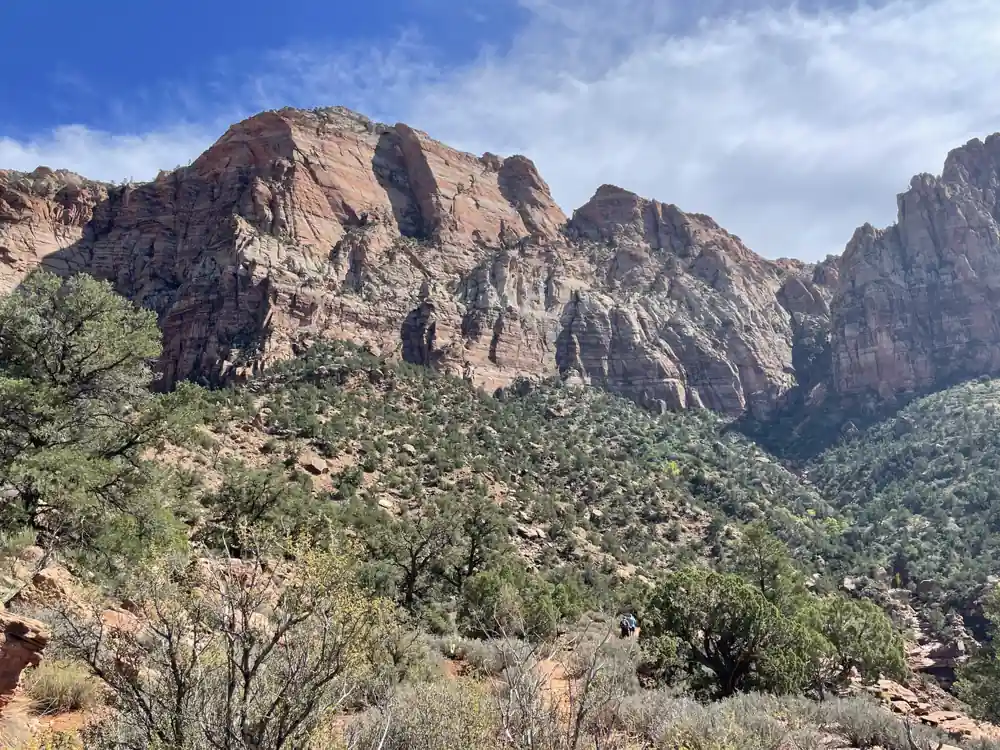
Watchman Trail is the stronger workout and the easier logistics. It starts near the Zion Canyon Visitor Center, so no shuttle ride is needed at all. The trail climbs 3.3 miles round trip with about 370 feet of elevation gain to an overlook facing the Watchman spire, the Virgin River, and the town of Springdale below. Most hikers take one and a half to two hours. Shade is limited and the afternoon sun is strong, so carry more water than you think you need. This is also a fine sunset hike if your schedule allows, just bring a headlamp for the walk down.
| Trail | Distance | Elevation gain | Time needed | Getting there |
|---|---|---|---|---|
| Riverside Walk | 2.2 miles round trip | Negligible, paved | About 1.5 hours | Shuttle stop 9, Temple of Sinawava |
| Lower Emerald Pools | 1.2 miles round trip | About 70 feet | About 1 hour | Shuttle stop 5, Zion Lodge |
| Canyon Overlook | 1 mile round trip | About 163 feet | About 1 hour | Drive yourself, east side, no shuttle |
| Watchman Trail | 3.3 miles round trip | About 370 feet | 1.5 to 2 hours | Walk from the Visitor Center, no shuttle |

The Angels Landing Question
Every Zion itinerary has to address Angels Landing, so here is the honest version. The chained section past Scout Lookout requires a permit won through the Recreation.gov lottery, and you cannot just show up and hike it. Our full Angels Landing permit guide explains the seasonal and day before lotteries, fees, and group size rules. For a single day visit, the realistic advice is this: unless you already hold a permit, skip it. The hike to Scout Lookout alone is strenuous and exposed, and fitting the full permitted hike into a one day plan means dropping almost everything else above. If you do hold a permit, it replaces the afternoon hike in this itinerary, not adds to it.
Where to Stay: Springdale
Springdale is the gateway town sitting right outside the park’s south entrance, and for a one day visit it is the obvious base. Staying there means you can park in town and ride the Springdale shuttle line straight to the park’s pedestrian entrance, skipping the in park parking scramble entirely. The town has the full range of hotels, restaurants, and the outfitters you need for Narrows gear rentals. Book ahead in spring and fall, when the town fills up. For the money side of the trip, see what a Utah Mighty 5 trip costs: park entry is $35 per private vehicle, good for seven days, so a single day visit pays the same as a week. For help choosing a base, see our guide to where to stay near Zion, which compares Springdale hotels, campgrounds, and nearby towns.
What to Skip With Only One Day
A one day plan works because it says no to the right things. Skip the Kolob Canyons section in the park’s northwest corner. It is beautiful, but it is a separate drive off Interstate 15 and eats half a day. Skip the full Narrows top down route, which needs a wilderness permit and a very long day. Skip Observation Point and the Subway, both of which demand far more time and, in the Subway’s case, a permit and technical skill. Zion rewards focus. Three good hikes beat five rushed ones.
What to Bring and What It Costs
Desert hiking has simple rules. Carry more water than feels necessary, wear sun protection, and bring layers for the temperature swing between sunny canyon floor and shaded narrows. Sturdy shoes with grip matter more than anything else you pack, especially if you step into the river. Our Utah national parks packing list covers the full kit if you want to double check your bag.
On cost, the numbers are straightforward. The entrance fee is $35 per private vehicle for seven days, $30 for a motorcycle, and $20 per person on foot or bicycle, with kids 15 and under free. The shuttle is free. None of the hikes in this itinerary need a permit except the optional Angels Landing chained section. Confirm the current entrance fees on the NPS website before you go, since fee rules do change.
Is One Day in Zion National Park Enough?
It is enough for a first taste, and that is exactly how to think about it. One day in Zion National Park covers the scenic drive, the river walk, a waterfall, and one big viewpoint, which is the core of the canyon experience. What one day cannot do is slow down. You will not have time for the Narrows in full, for Angels Landing, or for the quieter corners like Kolob Canyons. If Zion is the park you most want to see, give it two days inside a longer Utah loop. If it is one stop among five parks, this itinerary makes sure the single day counts.
If You Have More Than a Day
One day in Zion fits naturally into a longer Utah loop. Our 7 day Utah Mighty 5 road trip itinerary gives Zion two full days, which is enough to add the Narrows properly and slow the whole pace down. Either way, the shuttle lessons from this guide still apply: start early, know your last ride out of the canyon, and let the canyon set the schedule.