
One Day in Bryce Canyon: A Realistic Itinerary
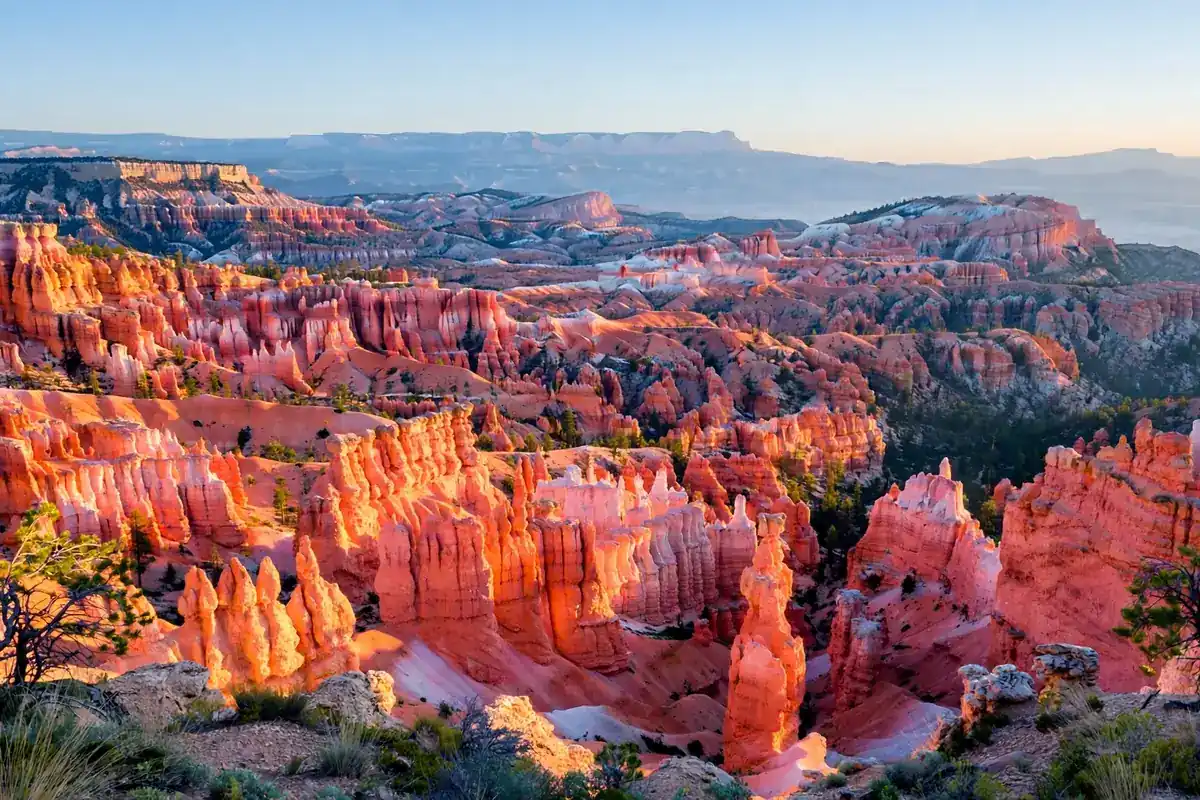
One day in Bryce Canyon is one of the best deals in the national park system. The park is compact, the main viewpoints sit within a few miles of each other, and a single great hike takes you down among the hoodoos and back up in under three hours. You will not see all of Bryce in a day, but you can see the essential Bryce: sunrise over the amphitheater, the famous below-the-rim loop, the big overlooks, and sunset. If you are still deciding when to come, read our guide to the best time to visit Utah’s national parks before you lock in dates, because Bryce sits at 8,000 feet and its seasons behave differently from Zion’s.
The One-Day Plan in Brief
Forget the hour-by-hour spreadsheet. One day in Bryce Canyon comes down to three non-negotiables and one optional extra.
- Sunrise at Sunrise Point. The name is the instruction. Arrive 30 to 45 minutes before sunrise.
- The Navajo Loop and Queen’s Garden combo hike. About 2.9 miles, two to three hours, the single best hike in the park.
- Sunset at Sunset Point or Bryce Point. End the day where you started the loop, watching the light change.
- Optional: the Southern Scenic Drive. If you have a car and an extra two hours, drive the 18 miles to Rainbow Point.
Everything below fills in those four blocks. Do the first three and the day is a success. Add the fourth if energy allows.
Start With Sunrise at Sunrise Point
Bryce Canyon’s sunrise is not a suggestion, it is the main event. The hoodoos catch the first light and turn shades of orange and pink that the midday sun washes out completely. Sunrise Point faces east into the amphitheater, which is exactly why it has the name.

Get there 30 to 45 minutes before the published sunrise time. The parking lot at Sunrise Point is small and fills fast in summer, and the walk from the lot to the rim is only a few minutes. Bring a warm layer no matter the month. At 8,000 feet, Bryce mornings are cold even in July, and you will be standing still watching the light for a while. This is also the trailhead for the Queen’s Garden trail, so scout the trail sign while you wait. You will be coming back here later.
The reason sunrise matters so much here is simple geology. The amphitheater opens to the east, so the rising sun strikes the hoodoos face-on while the sky behind you is still dim. For about twenty minutes the rock looks lit from within. Midday flattens everything into the same bright orange. If you only do one early morning on your whole Mighty 5 trip, spend it here.
If the lot is already full when you arrive, park at the visitor center or take the shuttle. The Bryce Canyon shuttle runs from early April to mid-October, roughly every 15 minutes, and it is free with your park admission. Unlike Zion, the shuttle here is optional, but during busy months the viewpoint lots fill by mid-morning and the shuttle saves real frustration. Outside the shuttle season you simply drive yourself everywhere.
The Morning Hike: Navajo Loop and Queen’s Garden
This is the hike the whole day is built around. The combination of the Navajo Loop and the Queen’s Garden trail is a 2.9-mile loop that drops you from the rim into the amphitheater, walks you past Thor’s Hammer and the Queen Victoria hoodoo, and climbs you back out. It takes most people two to three hours, and it is the single most rewarding thing you can do with one day in Bryce Canyon.
The standard direction starts at Sunset Point. Descend the Navajo Loop on the Wall Street side when it is open, a steep set of switchbacks through a narrow slot-like section where the walls press close on both sides. At the bottom, follow the connecting trail to the Queen’s Garden trail and climb out at Sunrise Point, which is the gentler ascent. Then walk the paved Rim Trail half a mile back to Sunset Point where you started. Your car is right there.
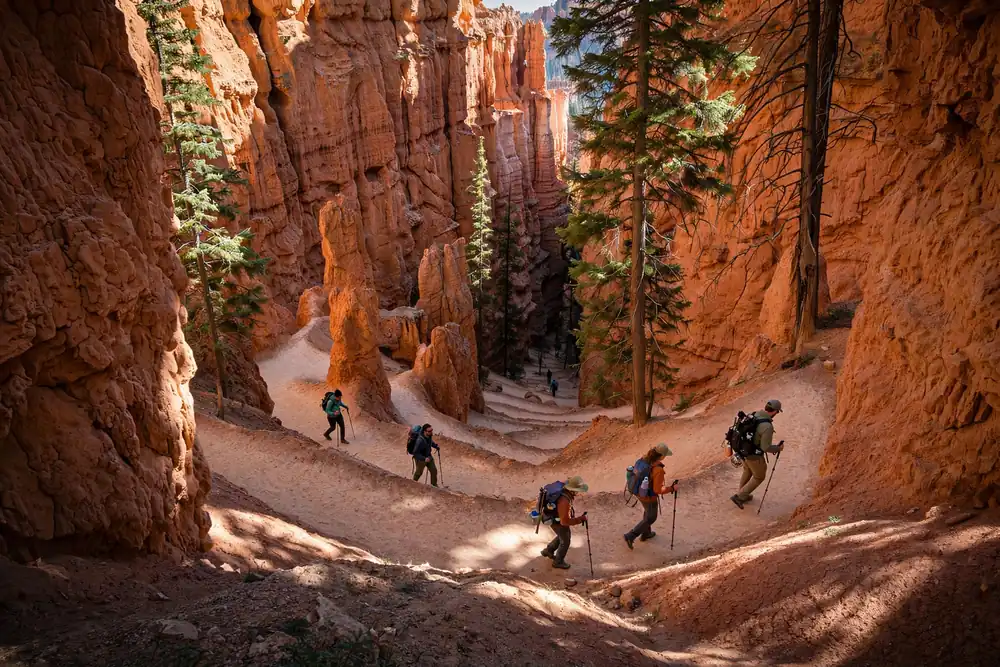
Two practical notes. First, Wall Street closes in winter and occasionally for rockfall work, so check the sign at the trailhead before you commit. If Wall Street is shut, descend the Two Bridges side of the Navajo Loop instead. The loop still works. Second, the climb out is real. You drop about 600 feet and you have to earn every foot back at 8,000 feet of elevation. Go slow, drink water before you feel thirsty, and do not be embarrassed to stop. Everyone stops.
|
Trail |
Distance |
Elevation Gain |
Time |
Trailhead |
|---|---|---|---|---|
|
Navajo Loop |
1.3 miles, loop |
About 550 feet |
1 to 2 hours |
Sunset Point |
|
Queen’s Garden |
1.8 miles, round trip |
450 feet |
1 to 2 hours |
Sunrise Point |
|
Navajo and Queen’s Garden combo |
2.9 miles, loop |
About 600 feet |
2 to 3 hours |
Sunset or Sunrise Point |
|
Rim Trail, Sunset to Sunrise |
0.5 miles, one way |
Negligible, paved |
20 to 30 minutes |
Either point |
|
Bristlecone Loop |
1.0 mile, loop |
200 feet |
About 1 hour |
Rainbow Point |
Midday: Walk the Rim’s Big Viewpoints
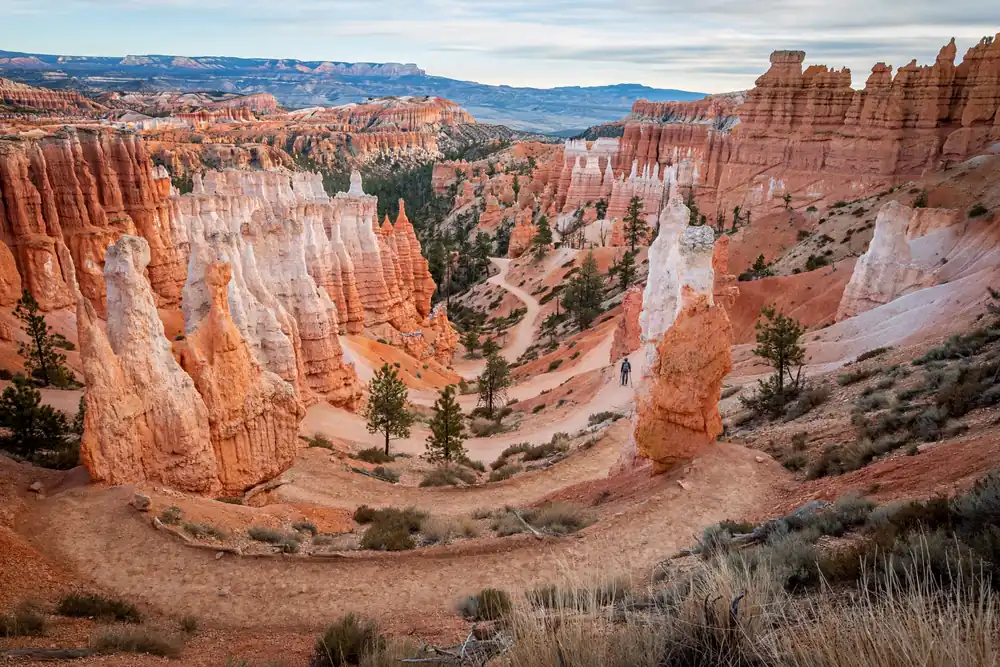
After the hike, stay on the rim and let your legs recover while your eyes do the work. The stretch of the Rim Trail between Sunset Point and Sunrise Point is only half a mile, paved, and mostly flat, with the amphitheater spread out below you the whole way. You already walked it at the end of the hike. Now walk it slowly.
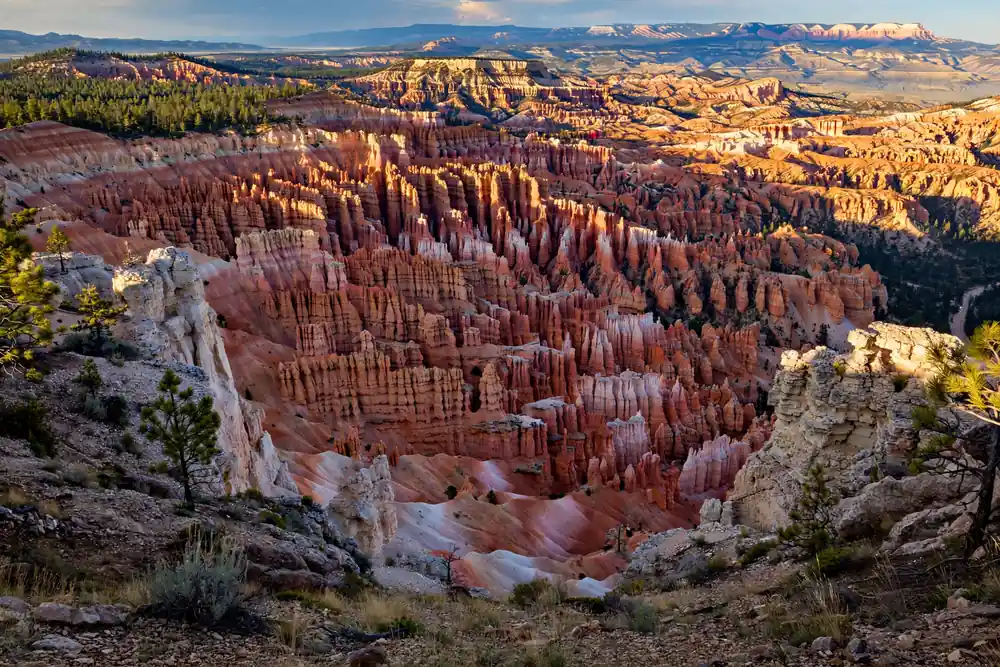
Then drive or shuttle to the two heavyweight overlooks. Inspiration Point gives the widest single view of the amphitheater, a full sweep of hoodoos, fins, and windows from three stepped viewing levels. Bryce Point looks down the length of the amphitheater and is many photographers’ pick for the single best viewpoint in the park. Keep an eye out for Thor’s Hammer near Sunset Point as well, a 150-foot freestanding hoodoo that has become the park’s unofficial mascot. Both overlooks are short walks from their parking lots, and an hour split between the two is plenty. The midday light is harsh for photos but fine for simply looking.
This is the natural lunch break in the day. There are picnic areas near Sunset Point, and the general store by Sunrise Point has supplies in season. Eat, refill water, and rest, because the afternoon decision is whether to drive south.
Afternoon Option: The Southern Scenic Drive
The Southern Scenic Drive runs 18 miles from the amphitheater area to Rainbow Point, the highest viewpoint in the park at 9,115 feet. The drive itself takes about an hour round trip without stops, and the shuttle does not serve it, so you need your own car. With one day, this is the optional block. If you are tired after the morning hike, skip it without guilt. The amphitheater is the park’s heart.
If you go, the drive is a different Bryce: quieter, higher, forested, with overlooks like Natural Bridge, Agua Canyon, and Ponderosa Canyon pulling off along the way. At the end, Rainbow Point looks out over a vast sweep of southern Utah, and the one-mile Bristlecone Loop walks you past ancient bristlecone pines, some of the oldest living trees on earth. Give the whole detour two hours door to door.
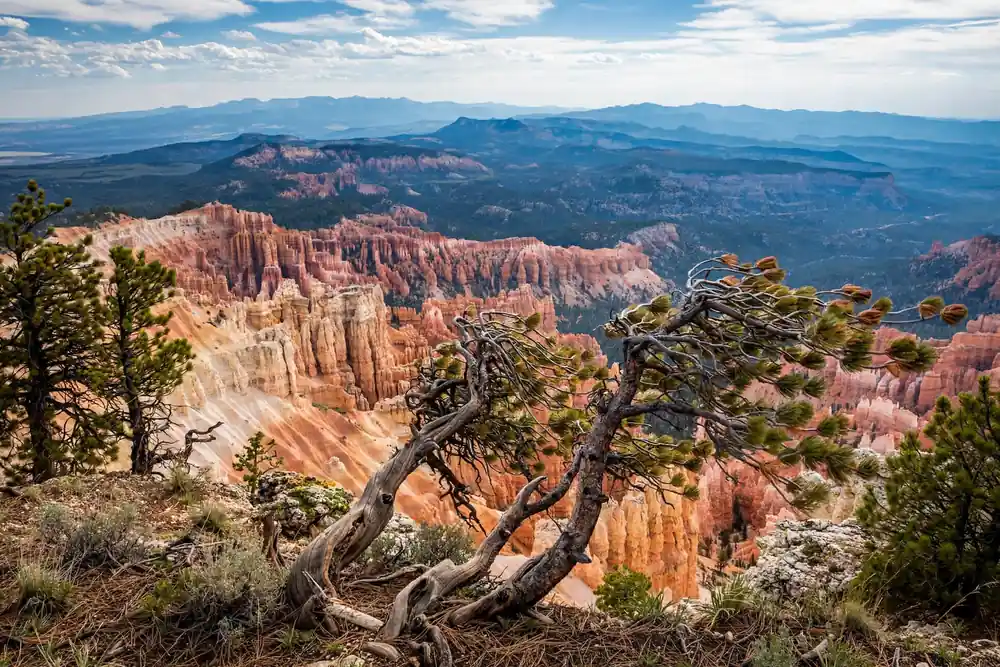
End With Sunset at Sunset Point or Bryce Point
Come back to the amphitheater for the golden hour. Sunset Point faces west into the Silent City formations and Thor’s Hammer, and it earns its name most evenings. Bryce Point is the quieter alternative with a longer view down the amphitheater, and many visitors prefer it precisely because the crowds thin out there. Either one works. Arrive 45 minutes before sunset, claim a spot on the rim wall, and watch the hoodoos go from orange to red to purple.
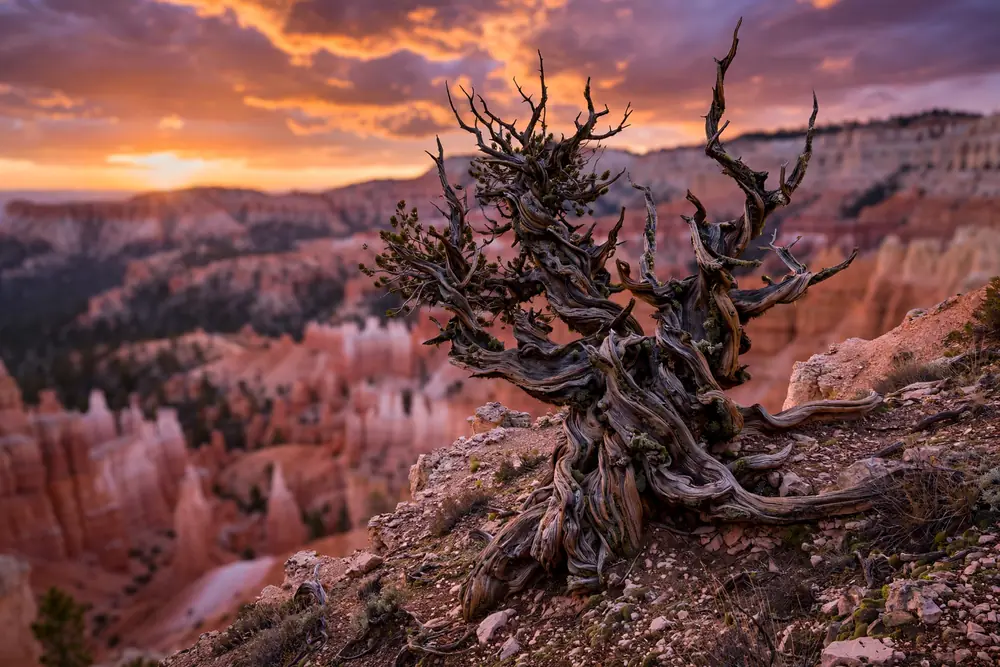
If the sky is clear, consider staying after dark. Bryce Canyon has some of the darkest night skies in the national park system, and the stars from the rim are a genuine attraction. Even twenty minutes of stargazing from Sunset Point parking lot is worth the wait.
The Altitude Factor: Bryce Plays by Different Rules
Here is the thing first-timers underestimate. Bryce Canyon’s rim sits around 8,000 feet, roughly twice the elevation of Zion Canyon’s floor. The air is thinner, the sun is stronger, and dehydration sneaks up faster. A few rules make the day much more pleasant.
- Drink water constantly, not when you feel thirsty. By the time thirst hits at altitude, you are already behind.
- Take the climbs slower than you think you need to. The switchbacks out of the amphitheater humble fit hikers.
- Wear sun protection even when it feels cool. The temperature says 75, the sun says otherwise.
- Mornings can be near freezing in spring and fall. Layers are not optional.
None of this is dramatic. It is just the difference between a great day and a headache. Our Utah national parks packing list covers the full kit, and altitude is one of the classic Mighty 5 road trip mistakes when people drive straight from Zion’s low desert to Bryce’s high rim without adjusting.
Where to Stay and What It Costs
Bryce Canyon City sits right outside the park entrance and holds most of the lodging, from the big historic lodge-style hotel to budget motels, plus restaurants and the shuttle station. Staying there means you can ride the shuttle into the park and skip the viewpoint parking scramble entirely. There is also a lodge inside the park itself, which books up far in advance for summer. Either way, book ahead from spring through fall.
On cost, the numbers are simple. The entrance fee is $35 per private vehicle, good for seven days. Walk-ins and cyclists pay a per-person rate, and kids 15 and under are free. One thing to know before you go: non-US residents aged 16 and over pay an additional $100 per person on top of the standard fee, unless entering with an annual or America the Beautiful pass. The park is cashless, so bring a card. Confirm the current entrance fees on the NPS website before your trip, since fee rules do change. For the full trip budget, see what a Utah Mighty 5 trip costs.
What to Skip With Only One Day
Bryce rewards focus. Skip the Fairyland Loop, an eight-mile trail that deserves a full morning of its own. Skip the full Peekaboo Loop unless you are combining it into the all-day Figure-8, which needs far more time and energy than a one-day visit allows. Skip the Under-the-Rim backcountry entirely. And do not try to add the Southern Scenic Drive, a long hike, and every viewpoint in one day. Pick the amphitheater or the drive, not both at full length.
Is One Day in Bryce Canyon Enough?
For Bryce, the honest answer is more generous than for Zion. One day in Bryce Canyon covers sunrise, the signature hike, the great viewpoints, and sunset, which is the core of the park. What one day cannot do is slow down: no Fairyland at dawn, no full Figure-8, no second sunrise to catch the light you missed. If Bryce is the park you most want to see, a second day lets you hike deeper and drive south without rushing. If it is one stop among five, this itinerary makes the single day count.
One day in Bryce Canyon also pairs naturally with Zion. The drive between the parks is about 85 miles, roughly two hours via the Zion-Mount Carmel Highway and Scenic Byway 12, so many visitors do Zion one day and Bryce the next. Our one day in Zion itinerary covers the other half of that pairing, and the 7 day Utah Mighty 5 road trip itinerary shows how both fit into the full loop.
|
Viewpoint |
Best For |
Effort |
Good to Know |
|---|---|---|---|
|
Sunrise Point |
Sunrise |
Easy, park at the overlook |
Queen’s Garden trailhead; lot fills early |
|
Sunset Point |
Sunset, Thor’s Hammer |
Easy, park at the overlook |
Navajo Loop trailhead; busiest at midday |
|
Inspiration Point |
Biggest panorama |
Easy, short uphill walk |
Three stepped viewing levels |
|
Bryce Point |
Sunset alternative, full amphitheater view |
Easy, park at the overlook |
Quieter than Sunset Point |
|
Rainbow Point |
End-of-drive vistas, Bristlecone Loop |
Easy, 18-mile drive to get there |
9,115 feet; no shuttle service |