
Canyonlands vs Arches: How to Split Moab Time
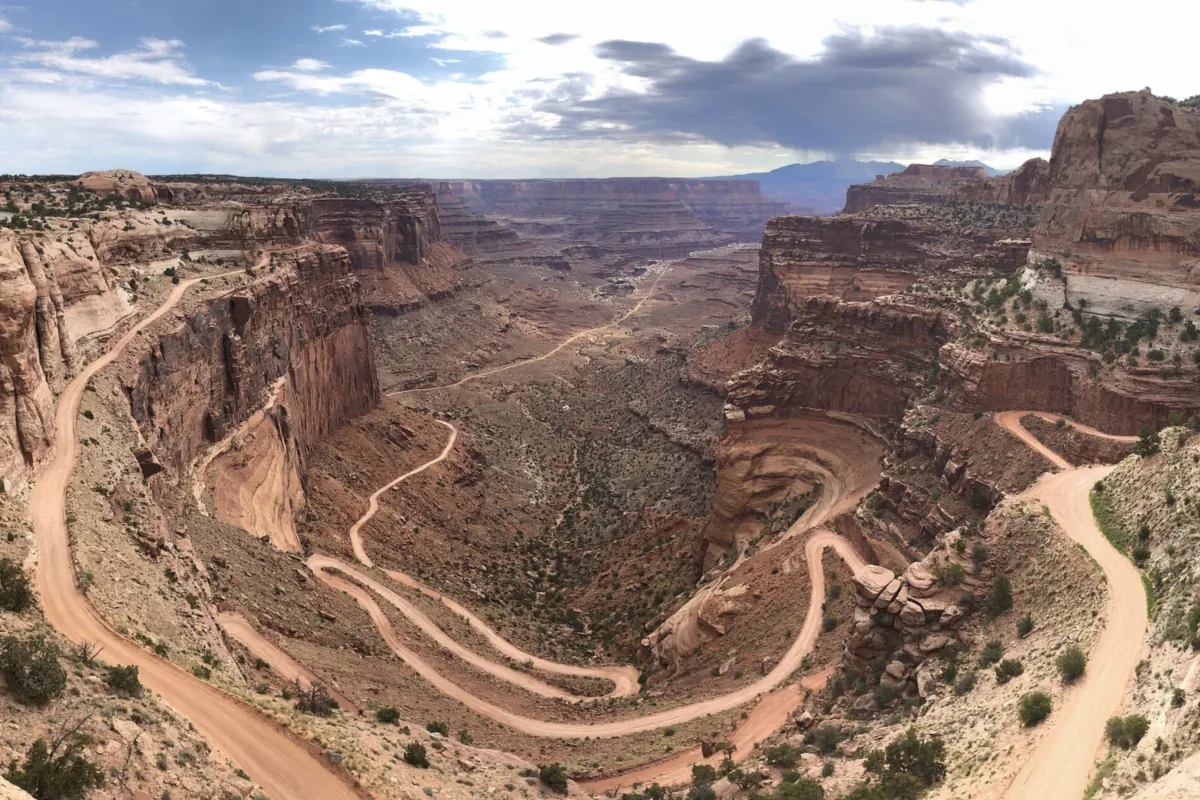
Photo: NPS / Collin Gilmore, public domain, via Wikimedia Commons.
Moab is the rare base town that serves two national parks at once, and that is exactly what makes the choice hard. Arches sits about five miles north of town, packed with more than 2,000 stone arches along one 18 mile scenic drive, while Canyonlands spreads across 337,598 acres in four separate districts, with the closest one, Island in the Sky, about 32 miles and 40 minutes away. For official hours, alerts, and planning details, see Canyonlands National Park and Arches National Park.
The short version is that the two parks reward different kinds of days, and most visitors should do both rather than pick one. Arches gives you famous sights close together, short walks to big arches, and the single most photographed trail in Utah, while Canyonlands gives you vast overlooks, long quiet trails, and a mesa-top drive where the views keep changing for 34 miles. The sections below work through the views, the hikes, the money, the crowds, and the seasons, then give you a one-day plan for each park and a two-day split that works.
Canyonlands vs Arches at a Glance
Here is the whole Canyonlands vs Arches Moab comparison on one screen. The table below is the decision in miniature, and the sections that follow explain the rows that matter most for your days in Moab.
|
Feature |
Arches |
Canyonlands |
|---|---|---|
|
Size |
76,519 acres, one compact park |
337,598 acres, four separate districts |
|
Landscape |
More than 2,000 natural stone arches |
Vast canyons carved by two rivers |
|
What you look at |
Up close, at arches and fins |
Far away, across canyons and mesas |
|
Best single view |
Delicate Arch at sunset |
Mesa Arch at sunrise |
|
Best one-day hike |
Delicate Arch Trail, 3 miles |
Grand View Point Trail, 1.8 miles |
|
2024 visitors |
1,466,528 |
818,492 |
|
Vehicle fee, 7 days |
$30 |
$30 |
|
Timed entry in 2026 |
None, ended 18 February 2026 |
None, never had one |
|
Shuttle |
None, drive yourself |
None, drive yourself |
|
Scenic drive |
18 miles, entrance to Devils Garden |
34 miles round trip, Island in the Sky |
|
Distance from Moab |
About 5 miles to the entrance |
About 32 miles to Island in the Sky |
|
Best season |
Spring and fall |
Spring and fall |
|
One-day feel |
Famous sights, close together |
Big space, long views, quiet trails |
Two rows in that table do most of the deciding. The size gap is more than four to one, and it explains why Arches feels like a park you can finish in a day while Canyonlands feels like a park you only ever sample. The visitor numbers matter too, because Arches drew about 1.8 times as many people as Canyonlands in 2024, and that crowd concentrates on one 18 mile road.
What Arches Actually Is
Arches is a compact park built around a single idea, and the idea is stone that has been carved into windows, spans, and fins. The park holds more than 2,000 natural stone arches, the densest concentration in the world, and the famous ones sit close to one road. The scenic drive runs 18 miles from the entrance to Devils Garden, and almost every stop on it is a short walk from the parking lot, which makes Arches the easiest of Utah’s five parks to see in a single day.

Arches is also the busier park by a wide margin, and the numbers back that up. It drew 1,466,528 visitors in 2024 against Canyonlands’ 818,492, and the crowds concentrate in the same few months and the same few stops. The park is open 24 hours a day, year round, so the early morning and the late evening belong to whoever is willing to get up for them.
What Canyonlands Actually Is
Canyonlands is a much bigger idea, and it takes more effort to understand. The park covers 337,598 acres where the Green and Colorado Rivers have carved a maze of canyons, mesas, and buttes, and it is divided into four districts that no road connects inside the park. The district most visitors see is Island in the Sky, a sheer-walled mesa more than 1,000 feet above the desert floor, reached by a 32 mile drive from Moab that takes about 40 minutes.
The experience at Canyonlands is almost the opposite of Arches. You drive a 34 mile round trip along the mesa top, stop at overlooks, and walk short rim trails whenever you want a closer look, which makes it a much calmer park to see in a few hours. The Needles district, the park’s second district, sits about 75 miles and 90 minutes from Moab in the other direction, and the Maze and Horseshoe Canyon districts are remote backcountry that most visitors never reach.

Canyonlands feels quieter and more remote than Arches, and the visitor numbers explain why. About 818,000 people visited in 2024, roughly half of Arches’ total, and the crowds spread along a 34 mile mesa-top road instead of stacking up at one arch. The park was established in 1964, and it is Utah’s largest national park by area, which is why a single day there still feels like a sample.
The Views, Side by Side
The view question is really a distance question, and the two parks answer it in opposite ways. At Arches you look up close, from a trail or a viewpoint a few hundred feet from the rock, at arches and fins that fill your whole field of vision. At Canyonlands you look far away, from a mesa rim more than 1,000 feet above the desert floor, across canyons that run to the horizon.
Arches’ best single view is Delicate Arch at sunset, a freestanding arch with a light opening 46 feet high and 32 feet wide, standing on a slickrock bowl with the La Sal Mountains behind it. It takes a 3 mile hike to reach, and the arch stays hidden until the last few steps, which is why the arrival feels like a reveal. Canyonlands’ best single view is Mesa Arch at sunrise, a 27 foot arch perched on the edge of the mesa that frames the canyon and the La Sals, and for about fifteen minutes the rising sun lights the cliff below and reflects orange onto the underside of the arch.

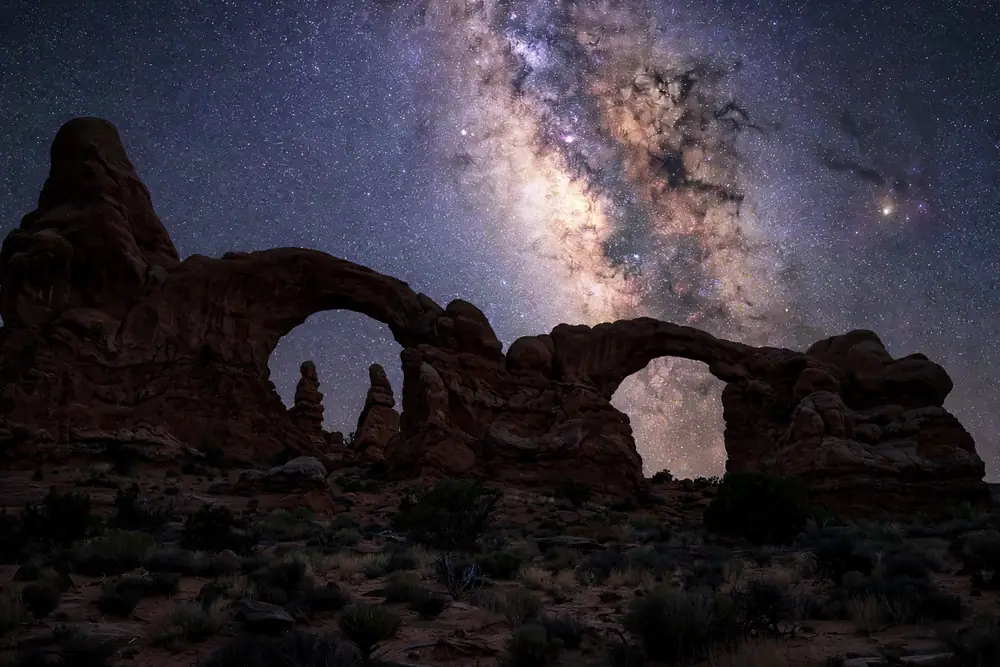
For photographers the choice depends on what time of day you shoot. Canyonlands is the stronger sunrise park, because Mesa Arch faces east and the glow is a morning event, and our Mesa Arch sunrise guide covers the arrival time and the crowds in detail. Arches is the stronger sunset park, because Delicate Arch faces east toward the La Sals and catches the evening light head on, and the Windows Section stays open all night for dark sky photography.
The Hikes, Side by Side
The hiking is where the two parks feel most different, and the difference is the length of the commitment. Arches’ best hikes are short and famous, because the arches sit close to the road and the trails are built for visitors who want a big sight in an hour or two. Canyonlands’ best hikes in Island in the Sky are also short, but they are rim walks with long views rather than destinations, and the park’s real hiking lives in the Needles district, where the trails run for miles through a maze of rock spires.
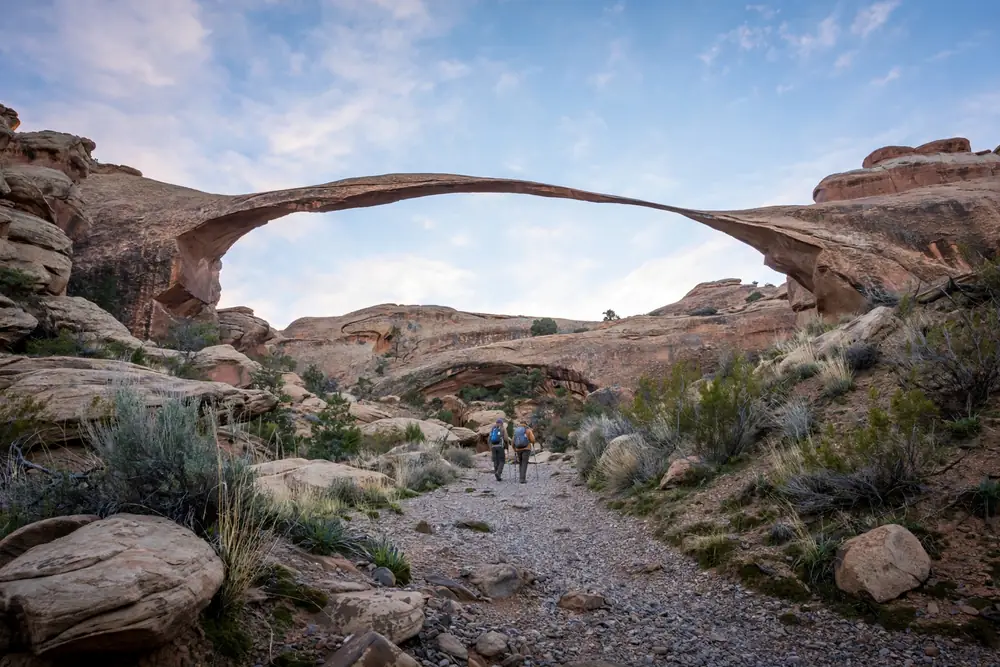
Arches’ one-day hiking list starts with the Delicate Arch Trail, a 3 mile round trip that takes two to three hours and climbs 538 feet over open slickrock with no shade, and continues with the Landscape Arch Trail, a 1.8 mile round trip to the longest arch in North America at about 290 feet. The Windows loop is a gentle mile, Double Arch is 0.6 miles from the same parking lot, and Park Avenue is a 1.8 mile round trip down into a canyon of fins. The one hike that needs real planning is the Fiery Furnace, a roughly 2 mile maze with no marked trail that you can enter only with a permit or on a ranger-led hike, and its status has changed more than once during 2026, so check the NPS conditions page before you plan around it.
Canyonlands’ one-day hiking list in Island in the Sky is shorter and calmer. The Mesa Arch Trail is the classic, a 0.6 mile round trip that takes about 30 minutes and climbs only 56 feet, and it is the easiest famous trail in either park. The Grand View Point Trail is 1.8 miles along the canyon edge with panoramic views, the White Rim Overlook is another 1.8 miles to an east-facing overlook above the Colorado River, and the Upheaval Dome trail is 0.6 miles to the first overlook above a three mile wide geological mystery. The Needles district is a different world, with day hikes of about 11 miles that need a full day of their own, and treating it as a half-day add-on is the most common planning mistake in Canyonlands.

The heat matters for the comparison, and it is worth stating plainly. Summer temperatures in both parks regularly pass 100 degrees, and the Park Service logged 23 heat-related search and rescue incidents across the two parks by early August 2026, with 11 at Arches and 12 at Canyonlands. The Park Service advises carrying two to three liters of water per person for front-country hikes and at least four liters for backcountry hikes, and avoiding strenuous activity between 10 in the morning and 5 in the afternoon.
The Money Question
The money question has a refreshingly simple answer, because both parks charge exactly the same entrance fee. A private vehicle costs $30 for seven days at Arches and $30 for seven days at Canyonlands, a motorcycle costs $25, and a person entering on foot or by bicycle costs $15, so the fee never decides the choice between them. The only way the fee matters is if you visit both, since two separate $30 fees add up to $60, which is where the annual pass starts to make sense.
|
Fee |
Arches |
Canyonlands |
|---|---|---|
|
Private vehicle, 7 days |
$30 |
$30 |
|
Motorcycle, 7 days |
$25 |
$25 |
|
Per person on foot or bike, 7 days |
$15 |
$15 |
|
America the Beautiful pass |
$80 resident / $250 nonresident |
$80 resident / $250 nonresident |
|
Southeast Utah Parks annual pass |
$55, residents only |
$55, residents only |
|
Nonresident surcharge |
None |
None |
The surcharge is the one cost that surprises people at other Utah parks, and it does not apply here at all. Since January 1, 2026, nonresidents pay an extra $100 per person aged 16 and over at 11 popular parks, and Zion and Bryce Canyon are both on that list, while Arches and Canyonlands are not. A nonresident couple visiting both Moab parks pays $60 in vehicle fees and nothing more. Our nonresident fee guide works through the full math for a Mighty 5 road trip, and our trip cost guide folds these figures into the whole budget.
One pass covers both parks, and it is the smart buy for a Moab trip. The America the Beautiful pass costs $80 for US residents and $250 for nonresidents, and it covers entrance fees at both parks for a full year, so it beats two $30 fees as soon as you add any other park to the trip. The Southeast Utah Parks annual pass costs $55 and covers Arches and Canyonlands plus Natural Bridges and Hovenweep for a year, but it is available to US residents only.
Crowds and the Gate Problem
Arches is the crowded park and Canyonlands is the calmer one, and the gap is bigger than the visitor numbers suggest. Arches drew 1,466,528 visitors in 2024 against Canyonlands’ 818,492, which is about 1.8 times as many, but Arches’ crowds also concentrate on one 18 mile road with a handful of small parking lots, while Canyonlands’ spread along a 34 mile mesa-top road with room to move.
Arches handled its crowds with a timed-entry reservation system from 2022 through 2025, and then it ended. On February 18, 2026, the Park Service announced that Arches would not require timed-entry reservations for 2026, and visitors may now enter at any time during operating hours with a valid entrance pass. The change sounds like freedom, and in the quiet months it is, but on busy spring and fall days the gate now closes by mid-morning once the parking lots fill, and it can stay closed for hours.
Canyonlands never had a timed-entry system, and it does not need one, because the park’s size absorbs its crowds. The Island in the Sky parking lots still fill on busy days, especially at Mesa Arch on spring and fall mornings and at Grand View Point in the middle of the day, but the park has no gate that closes on you, and the 34 mile road keeps moving. The one crowd that does concentrate is the Mesa Arch sunrise crowd, where dozens of photographers gather shoulder to shoulder on peak mornings, so arrive 45 to 60 minutes before sunrise if you want a front spot.
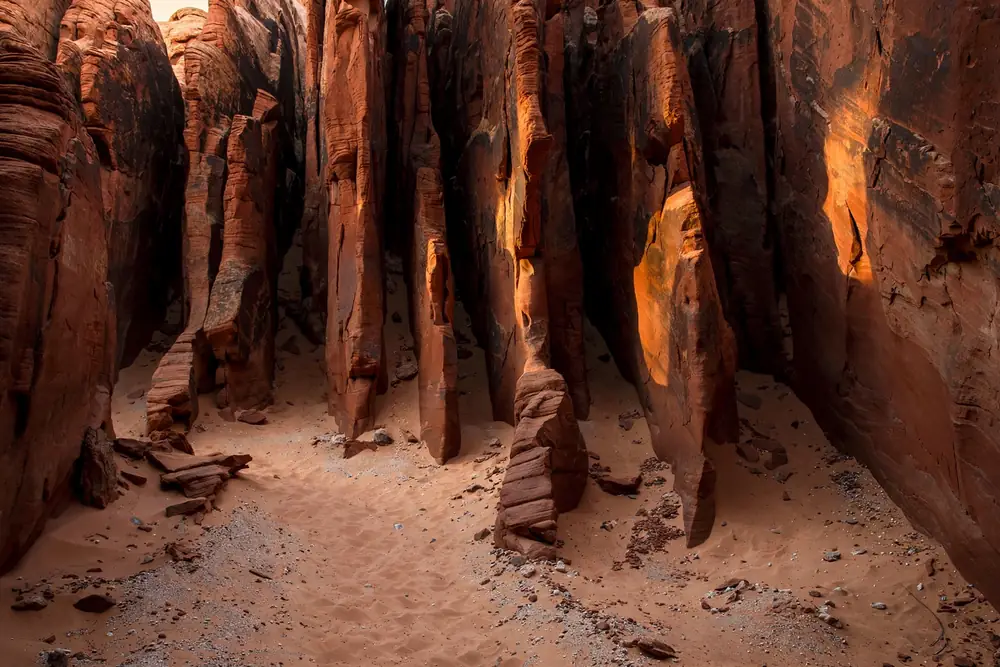
Parking is the other crowd problem, and it is worse at Arches. The Wolfe Ranch lot for Delicate Arch fills on busy mornings, the Windows lot fills by mid-morning, and the Devils Garden lot at the end of the road fills after that, which leaves you circling or waiting. Canyonlands’ lots fill too, especially at Mesa Arch, but the park has more room to absorb a busy day, and the scenic drive keeps moving, so the pressure is lower.
Spring, Summer, Fall, and Winter: When Each Park Wins
Spring and fall are the sweet spot for both parks, and there is no real contest about it. The daytime temperatures sit in the 60s and 70s, the trails are comfortable all day, and the light is good from morning to evening, which is why April and May and September and October are also the busiest months.
Summer flips the advantage toward the early morning and the late evening. Both parks sit in the same desert around Moab, and summer temperatures regularly pass 100 degrees, with almost no shade on the trails. The Delicate Arch trail has no shade at all, and the Mesa Arch trail is short but exposed, so the smart plan in summer is to hike before 10 in the morning, drive and rest through the middle of the day, and come back out for sunset.
Winter is the quiet season, and it suits both parks in different ways. Arches in winter means cold mornings, possible ice on the Delicate Arch ledge, and empty parking lots, with the red rock dusted in snow on the best days. Canyonlands in winter means the same cold and the same quiet, with the added chance that the entrance road can close for a short period after a winter storm, and the Shafer Trail and White Rim Road can turn muddy and slick.
The rule of thumb is simple, and it holds all year, so pick your hours rather than your park. In spring and fall, either park works all day, and the choice comes down to arches or canyons. In summer, both parks work in the morning and the evening, and neither works well at noon. In winter, both parks work all day if you dress for the cold, and both reward the traveler who gets up early.
One Day in Arches
Here is a realistic one-day sketch for Arches, built around an early start and the three famous stops. It skips the Fiery Furnace, which needs a permit booked days ahead, and it skips the full Devils Garden loop, which needs most of a morning on its own, and it leaves room for lunch back in Moab. The full hour-by-hour version is in our one day in Arches guide, and our Delicate Arch hike guide and best arches besides Delicate Arch cover the trails in detail.
|
Time |
Stop |
Notes |
|---|---|---|
|
7:00 am |
Park Avenue, 1.8 miles |
First stop on the scenic drive, fins in morning light |
|
Morning |
Delicate Arch Trail, 3 miles |
Start early, no shade, carry at least 2 liters of water |
|
Midday |
Windows and Double Arch, 1 mile |
Short walks from one parking lot, easy in the heat |
|
Lunch |
Moab |
Drive back to town, or picnic at Devils Garden |
|
Afternoon |
Landscape Arch, 1.8 miles |
End of the park road, longest arch in North America |
|
Late afternoon |
Balanced Rock, 0.3 miles |
Short loop at the base, easy stop on the way out |
|
Sunset |
Delicate Arch or the Windows |
Evening light on the arch face, or dark sky after dark |
The shape of the day is the early start, and the smartest move is the first hour. The gate can close by mid-morning on busy days once the lots fill, and the Delicate Arch lot is one of the first to go, so the visitors who arrive at 7 in the morning get the trail nearly empty.
One Day in Canyonlands Island in the Sky
Here is a realistic one-day sketch for Canyonlands Island in the Sky, built around sunrise, the mesa-top drive, and the short rim trails. It keeps the driving relaxed and the walkingeasy, and it ends where the light is best. The full hour-by-hour version is in our one day in Canyonlands Island in the Sky guide.
|
Time |
Stop |
Notes |
|---|---|---|
|
Sunrise |
Mesa Arch, 0.6 miles |
Arrive 45 to 60 minutes early, the glow lasts about 15 minutes |
|
Morning |
Upheaval Dome, 0.6 miles |
First overlook above a 3 mile wide geological mystery |
|
Late morning |
Grand View Point Trail, 1.8 miles |
Canyon edge walk, panoramic views, check remodel status first |
|
Midday |
White Rim Overlook, 1.8 miles |
East-facing overlook above the Colorado River |
|
Afternoon |
Shafer Canyon Overlook |
Look down the switchbacked dirt road below the mesa |
|
Sunset |
Green River Overlook |
Faces west into the sinking sun |
|
After dark |
Mesa-top pullout |
Dark skies, the park is open 24 hours |
The shape of the day is the sun, and the smartest move is the early start. Sunrise at Mesa Arch is the single best hour in Canyonlands, and the mesa empties out by mid-morning, so the Grand View Point Trail is quietest right after the light changes.
If You Have Two Days: The Split That Works
Two days in Moab is the honest answer for most visitors, because it gives each park a full day and removes the choice entirely. The Canyonlands vs Arches Moab question stops being a contest once you have two days, and it becomes a scheduling problem, which is much easier to solve.
Give Arches the first day, because it is the park that punishes a late start. Enter before 8 in the morning, hike Delicate Arch while the rock is still cool, work the Windows and Double Arch through the middle of the day, and finish at Landscape Arch and Balanced Rock in the afternoon. Give Canyonlands the second day, because it is the park that rewards a slow morning. Arrive before sunrise for Mesa Arch, drive the mesa-top road through the morning, walk the Grand View Point Trail, and finish at Green River Overlook for sunset.
The drive between the two parks is short, and that is what makes the split easy. The Arches entrance sits about five miles north of Moab, and the Island in the Sky visitor center sits about 32 miles from Moab in the other direction, so the drive from one park entrance to the other takes about 45 minutes through town. You sleep in the same bed both nights, eat in the same town, and never pack the car for a transfer day. If you have an extra half day around Moab, Dead Horse Point is an easy addition on the way to Canyonlands, with a short rim walk and a famous Colorado River overlook.
If You Can Only Pick One
Here is the Canyonlands vs Arches answer by traveler type, because the right park depends on who is traveling. Read the one that matches your trip and skip the rest.
Families with small kids
Pick Arches if your kids are young enough to need short walks, because the Windows, Double Arch, and Balanced Rock are all under a mile, and the park’s famous sights come to you instead of asking you to hike to them. Pick Canyonlands if your kids are old enough to walk a mile on a rim trail, because the Mesa Arch Trail is only 0.6 miles and the viewpoints are short walks from the car.
Photographers
Pick Canyonlands for sunrise, because Mesa Arch is the most photographed sunrise in Utah, and the glow on the underside of the arch is a morning event you cannot get anywhere else. Pick Arches for sunset and night, because Delicate Arch catches the evening light head on, and the Windows Section is one of the darkest and most photographed night skies in the country. Photographers with two days should do both, and photographers with one day should pick the light they care about most.
First-time visitors
Pick Arches if you want the famous Utah sights, because it is the park most people picture when they hear the name Moab, and the scenic drive delivers one icon after another. Pick Canyonlands if you want the landscape you have never seen anywhere else, because there is nothing quite like standing on a mesa rim and looking across canyons that run to the horizon, and the park is easier to enjoy without a plan.
Hikers
Pick Arches if you want short, famous hikes, because Delicate Arch is the signature trail in Utah, and the Landscape Arch and Devils Garden trails add variety without a long day. Pick Canyonlands if you want long, quiet hiking, because the Needles district holds the Chesler Park Loop and the Druid Arch Trail, both about 11 miles, and those are the best full-day hikes in the Moab area.
Summer visitors
Pick neither park at noon, and pick both parks in the morning and the evening, because summer temperatures in both parks regularly pass 100 degrees and the trails have almost no shade. The Delicate Arch trail is the harder summer hike, since it is three miles of open slickrock with no shade, while the Mesa Arch trail is the easier one, since it is only 0.6 miles.
Winter visitors
Pick either park, and it is close, because both stay open 24 hours a day all winter, both are quiet, and both reward the traveler who dresses for the cold. Arches in winter means possible ice on the Delicate Arch ledge and empty parking lots, while Canyonlands in winter means the chance of a short road closure after a storm and the same empty lots. Winter is the best season for travelers who value solitude, and the choice comes down to arches or canyons again.
The Needles Question
The Needles district is the part of Canyonlands that most visitors skip, and it is also the part that changes the comparison. The district sits about 75 miles and 90 minutes from Moab, reached by US-191 south and then UT-211 west, and it has its own 13 mile round-trip scenic drive, its own visitor center, and its own entrance station. There is no road connecting the Needles to Island in the Sky inside the park, and the drive between the two districts takes two to six hours depending on the route, so the Needles is a separate day trip, not a stop on the way.
The Needles is named for the banded Cedar Mesa sandstone spires that tower over the trails, and it is the best hiking district in either park. The Chesler Park Loop runs about 11 miles through a maze of spires, the Druid Arch Trail runs about 11 miles round trip, and the shorter trails are under a mile each. Budget five hours or more in the district itself, plus three hours of driving, and do not try to combine it with Island in the Sky in a single day.
Where to Stay: One Base in Moab
The practical answer is to stay in Moab for both parks, because the town sits between them and serves both. Moab holds the hotels, restaurants, grocery stores, and gas stations for the whole area, and there is no food, no gas, and no lodging inside either park. The Arches entrance is about five miles north of town, and the Island in the Sky visitor center is about 32 miles away, so every day starts with a short drive and ends with dinner in town.
The town is small, and it books up in the busy months, so reserve ahead for spring and fall. Campers have one more option, since Arches holds the Devils Garden Campground with 51 sites that need reservations from March through October, and Canyonlands holds Willow Flat with 12 first-come sites and no running water. Book the campground months ahead in spring and fall, and carry your own water for Willow Flat.
Frequently Asked Questions
Is Canyonlands vs Arches Moab a fair comparison?
Yes, it is, because the two parks share one base town and one road trip, even though they are very different places. Arches is compact and famous, with more than 2,000 arches along one 18 mile road, while Canyonlands is vast and quiet, with 337,598 acres in four districts and a 34 mile mesa-top drive.
Can I do both Arches and Canyonlands in one day?
You can, but you will miss the best parts of both, and we would not recommend trying. The two parks charge two separate $30 fees, the drive between the entrances takes about 45 minutes through Moab, and each park deserves a full day on its own. The honest version of a one-day visit is a single park done well, with the other saved for the next trip.
Which park is better, Arches or Canyonlands?
Neither park is better in general, and the answer depends on who is traveling. Arches wins for first-time visitors, families with small kids, and anyone who wants famous sights close together, while Canyonlands wins for photographers at sunrise, hikers who want long quiet trails, and anyone who wants space and solitude.
Do I need a reservation for Arches in 2026?
No, not for general entry, because Arches ended its timed-entry reservation system on February 18, 2026, and visitors may now enter at any time during operating hours with a valid entrance pass. The change has one catch, which is that the gate can close by mid-morning on busy days once the parking lots fill, so arrive before 8 in the morning or after 4 in the afternoon. Reservations are still required for the Devils Garden Campground from March through October and for Fiery Furnace hikes, and the Fiery Furnace permit status has changed during 2026, so check the NPS conditions page before you plan around it.
Which park is better with kids?
Both parks work for families, and the choice depends on the kids’ ages. Arches has the short, easy walks to the Windows, Double Arch, and Balanced Rock, all under a mile, while Canyonlands has the 0.6 mile Mesa Arch Trail and short viewpoint walks from the car.
The Bottom Line
So the Canyonlands vs Arches Moab answer is not one winner, and that is good news, because it means the choice is yours to make well. Pick Arches if you want famous sights close together, short walks to big arches, the most photographed trail in Utah, and a park you can reach five miles from your hotel. Pick Canyonlands if you want vast overlooks, long quiet trails, a mesa-top drive where the views keep changing for 34 miles, and the best sunrise in the state.
Start with the 7-day Mighty 5 itinerary if you are building a longer trip, check the best time to visit for your month, and pack for desert heat with our packing list. Whichever park you choose, the other one will still be there, about half an hour down the road from Moab, and that is the best reason to stay one more day.