
Zion vs Bryce Canyon: Which Park Should You Pick for One Day?
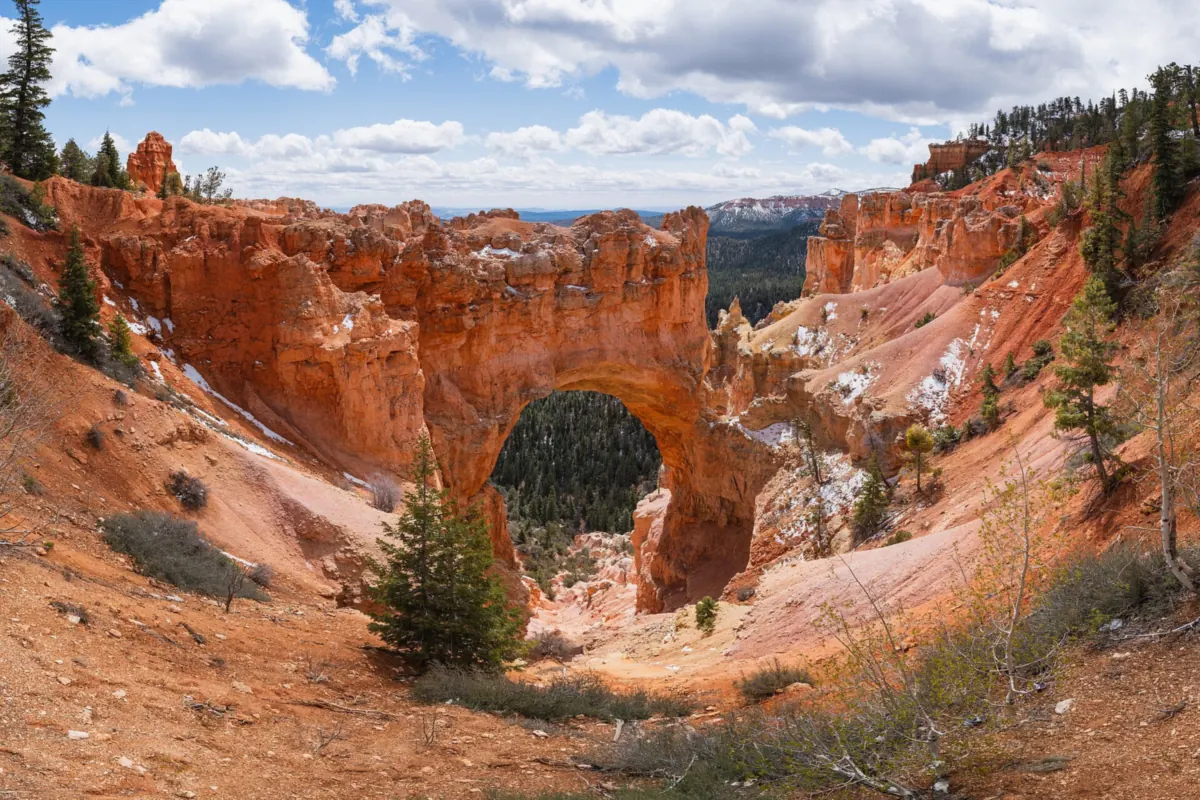
Photo: Christian David, CC BY-SA 4.0, via Wikimedia Commons.
Two of Utah’s five national parks sit about 85 miles apart, and a lot of travelers have exactly one day to give to one of them. Zion is the famous one, a red rock canyon you walk through at the bottom of towering walls, while Bryce is the strange one, a high rim looking down on a bowl of orange stone spires. This Zion vs Bryce guide compares them honestly on the things that decide a day trip, so you can pick the park that fits your trip instead of the one with the better postcard. For official hours, alerts, and planning details, check Zion National Park and Bryce Canyon National Park.
The short version is that neither park wins outright, and that is the whole point of the comparison. Zion gives you river walks, a shuttle ride through a canyon, and hikes that feel big even when they are short, while Bryce gives you viewpoints you can drive to, a trail down among the hoodoos, and cooler air in summer. The sections below work through the views, the hikes, the money, the crowds, and the seasons, then give a verdict for each kind of traveler.
Zion vs Bryce at a Glance
Here is the whole Zion vs Bryce comparison on one screen. The table below is the decision in miniature, and the sections that follow explain the rows that matter most for your day.
|
Feature |
Zion |
Bryce Canyon |
|---|---|---|
|
Landscape |
A sandstone canyon carved by the Virgin River |
A high rim amphitheater of orange hoodoos |
|
Elevation |
Canyon floor about 4,000 feet |
Rim 8,000 to 9,100 feet |
|
What you look at |
Up, at walls about 2,000 feet tall |
Down, into a bowl of stone spires |
|
Best single view |
Canyon Overlook |
Sunset Point at sunrise |
|
Best one-day hike |
Riverside Walk plus Canyon Overlook |
Queen’s Garden Trail |
|
2024 visitors |
4,946,592 |
2,498,075 |
|
Vehicle fee, 7 days |
$35 |
$35 |
|
Shuttle |
Free, required March 7 to November 28 |
Free, optional April 3 to October 18 (ended for 2026) |
|
Best season |
Spring and fall |
Spring and fall, summer for cool air |
|
Winter |
Mild, quiet, drive the canyon yourself |
Cold and snowy, some trails closed |
|
Closest town |
Springdale, at the park gate |
Bryce Canyon City, at the park gate |
|
One-day feel |
A canyon you walk through |
A rim you look down from |
Two rows in that table do most of the deciding. The elevation gap is about 4,000 feet, and it explains almost everything about the weather difference, since Bryce sits high enough to catch snow while Zion stays mild well into November. The visitor numbers matter too, because Zion drew almost exactly twice as many people as Bryce in 2024, and that crowd shows up in the shuttle lines.
If you only have a day and you want the full picture, start with our one day in Zion and one day in Bryce Canyon guides after this comparison. They hold the hour-by-hour detail, while this article tells you which one to read first.
What Zion Actually Is
Zion is a canyon you stand inside. The Virgin River cut a gorge through red and white sandstone, and the park’s main road runs along the canyon floor between walls that rise about 2,000 feet on both sides, so the scale hits you from below rather than from a viewpoint. Most of the park’s famous sights sit along one 6.2 mile road, the Zion Canyon Scenic Drive, and from March through late November you ride it on the free shuttle instead of driving it yourself.
That shuttle is the first thing a first-time visitor needs to understand, because it sets the pace of the whole day. The bus has nine stops and the ride takes about 45 minutes one way, and every hike in the canyon starts from a shuttle stop, so you plan your day around the bus schedule instead of your car. The trade-off is real, since the shuttle removes traffic and keeps the canyon quiet, but it also means you cannot just drive to a viewpoint, snap a photo, and move on the way you can at Bryce.

Zion is also the busier park by a wide margin, and the numbers back that up. It was the second most visited national park in the United States in 2024 with 4,946,592 visitors, nearly double Bryce’s 2,498,075, and the crowds concentrate in the same few months and the same few stops. Springdale sits right at the park gate, with restaurants and lodges a short walk from the visitor center and the shuttle.
What Bryce Actually Is
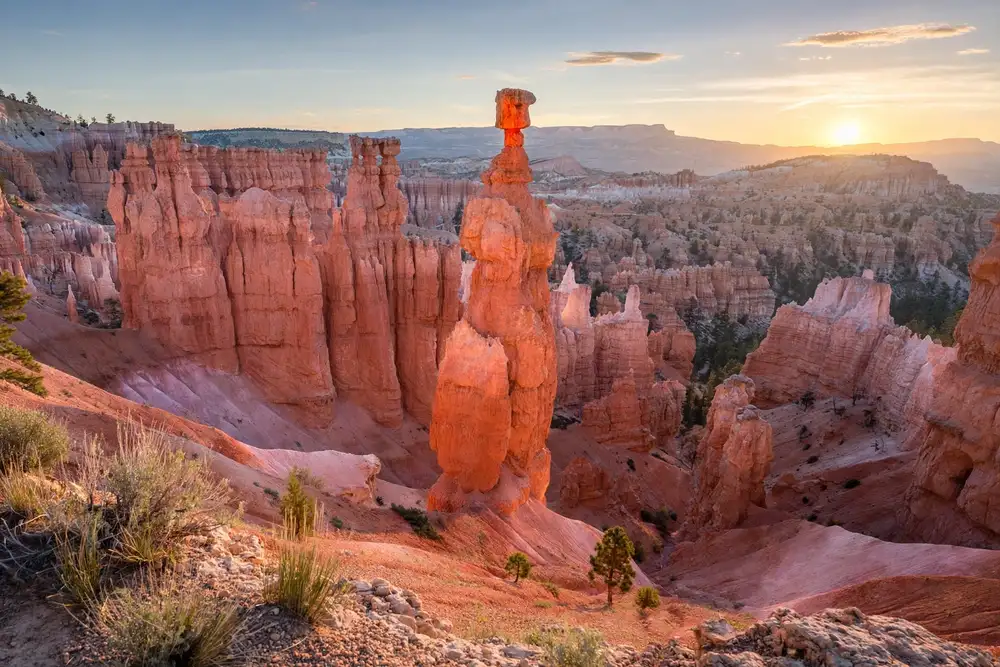
Bryce is a rim you stand on. The park sits at 8,000 to 9,100 feet on the edge of the Paunsaugunt Plateau, and the famous view is the amphitheater, a natural bowl packed with hoodoos, which are thin stone spires in orange, pink, and white. The Park Service says Bryce holds the largest concentration of hoodoos on Earth, and once you see the amphitheater at sunrise you understand why the park exists.
The experience at Bryce is almost the opposite of Zion’s. You drive an 18 mile scenic road along the rim, stop at overlooks, and walk a short trail down among the hoodoos whenever you want a closer look, which makes it a much easier park to see in a few hours. The shuttle is free and optional, it only runs the amphitheater area from April to mid-October, and after it ends for the year you simply drive yourself, so the park never funnels you onto a bus the way Zion does.

Bryce feels quieter and more remote than Zion, and the visitor numbers explain why. About 2.5 million people visited in 2024, roughly half of Zion’s total, and the crowds spread along the rim instead of stacking up at one canyon road. Bryce Canyon City sits at the gate with a handful of lodges and restaurants, but it is much smaller than Springdale.
The Views, Side by Side
The view question is really a direction question, and the two parks point opposite ways. At Zion you look up, from the canyon floor, at walls that rise about 2,000 feet and change color as the sun moves across them, and the best moments are the ones where the light hits a single wall or a hanging garden while the river runs below. At Bryce you look down, from the rim, into a bowl of stone spires, and the best moments are the ones where the morning sun turns the whole amphitheater orange at once.
Zion’s best single view is the Canyon Overlook, a one mile walk from the east side of the park that ends at a fenced viewpoint above Pine Creek Canyon, with the Great Arch and the highway switchbacks far below. It takes about an hour round trip and rewards you far out of proportion to the effort, which is why it tops our easy hikes in Zion list. Bryce’s best single view is Sunset Point at sunrise, which sounds backwards until you stand there, because the morning light hits the amphitheater head on and the hoodoos glow while the shadows are still long.

For photographers the choice depends on what kind of picture you want to make. Bryce is the stronger sunrise and sunset park, because the amphitheater faces east and the hoodoos catch color at both ends of the day, and our Bryce viewpoints guide covers the four rim overlooks in detail. Zion is the stronger canyon light park, because the walls create deep shadow and bright highlights in the same frame, and the best light often comes mid-morning and late afternoon rather than at the golden hour. Bryce gives you the easier win, since you can drive to the rim, set up, and shoot without hiking first.
The Hikes, Side by Side
The hiking is where the two parks feel most different, and the difference is the direction of the effort. Zion’s best day hikes are mostly flat or gentle, because the canyon floor is the easy ground and the hard work is climbing out of it, while Bryce’s best day hike goes down first and makes you climb back up. Both parks have a short, easy, famous walk, and both have one big hike that defines them.
Zion’s one-day hiking list starts with the Riverside Walk, a paved 2.2 mile round trip beside the Virgin River that ends at the mouth of the Narrows, and continues with the Lower Emerald Pool Trail, a 1.2 mile round trip to a waterfall and a hanging garden. The Canyon Overlook Trail is the third piece, a one mile round trip with 163 feet of climbing and the best view in the park. The two big names need planning, since Angels Landing is 5.4 miles round trip with 1,488 feet of climbing and requires a permit past Scout Lookout, and the Narrows is a wade through the river that closes when the flow tops 150 cubic feet per second or a flash flood warning is in effect. Our Angels Landing permit guide and Narrows guide cover both in detail.
Bryce’s one-day hiking list is shorter and simpler. The Queen’s Garden Trail is the classic, a 1.8 mile round trip with 357 feet of climbing that drops from Sunrise Point down to the Queen Victoria hoodoo, and it is the gentlest way into the amphitheater. The Navajo Loop is the usual partner, a 1.3 mile loop from Sunset Point that joins Queen’s Garden into a 2.9 mile combined hike, but the Wall Street side of the Navajo Loop is closed until further notice after a flash flood in August 2026, so the full loop cannot be completed right now. The Two Bridges side remains open, according to the NPS conditions page, which lists only Wall Street and the Bryce Connector Trail as closed, so it can still be paired with the Queen’s Garden Trail. The Rim Trail between Sunrise and Sunset Points is a paved half mile and the easiest walk in the park, and our Navajo Loop and Queen’s Garden guide covers the combination in full.

The closures matter for the comparison, and they are worth stating plainly. In Zion, the Watchman Trail has been closed since August 31, 2026 pending repairs, Hidden Canyon is closed, and Observation Point cannot be reached from Zion Canyon, while the Weeping Rock Trail reopened on September 5, 2025 after a rockfall closure. In Bryce, the Wall Street side of the Navajo Loop and the Bryce Connector Trail are closed until further notice, and the Rim Trail between Inspiration and Bryce Points closes for the whole winter season. Check both parks’ NPS conditions pages on the morning of your trip, because trail status is the one thing that can change a plan overnight.
The Money Question
The money question has a refreshingly simple answer, because both parks charge exactly the same entrance fee. A private vehicle costs $35 for seven days at Zion and $35 for seven days at Bryce, a motorcycle costs $30, and a person entering on foot or by bicycle costs $20, so the fee never decides the choice between them. The only way the fee matters is if you visit both, since two separate $35 fees add up to $70, which is where the America the Beautiful pass starts to make sense.
|
Fee |
Zion |
Bryce Canyon |
|---|---|---|
|
Private vehicle, 7 days |
$35 |
$35 |
|
Motorcycle, 7 days |
$30 |
$30 |
|
Per person on foot or bike, 7 days |
$20 |
$20 |
|
America the Beautiful pass |
$80 resident / $250 nonresident |
$80 resident / $250 nonresident |
|
Nonresident surcharge |
$100 per person 16+, waived with a pass |
$100 per person 16+, waived with a pass |
The surcharge is the one cost that surprises people, and it applies at both parks. Since January 1, 2026, nonresidents pay an extra $100 per person aged 16 and over at 11 popular parks, and Zion and Bryce are both on that list, while Arches, Canyonlands, and Capitol Reef are not. The surcharge is waived if you hold an annual or America the Beautiful pass, so a nonresident couple visiting both parks would pay $70 in vehicle fees plus $200 in surcharges without a pass, or $250 for the pass instead. Our trip cost guide works through the full math for a Mighty 5 road trip.
Crowds and How Each Park Handles Them
Zion is the crowded park and Bryce is the calmer one, and the gap is bigger than the visitor numbers suggest. Zion drew 4,946,592 visitors in 2024 against Bryce’s 2,498,075, which is almost exactly double, but Zion’s crowds also concentrate in one canyon and one shuttle line, while Bryce’s spread along an 18 mile rim road. The practical result is that Zion feels busy from the moment you arrive in Springdale, and Bryce feels busy only at the four amphitheater viewpoints at sunrise and sunset.
Zion handles its crowds with a mandatory shuttle, which runs from March 7 to November 28 in 2026 and is free with no ticket or reservation. The first bus leaves the visitor center at 7:00 am and the last bus out of the canyon leaves in the early evening, and private vehicles are banned from the scenic drive while the shuttle runs. The system works, but it means your day has a fixed shape, since you queue for the bus, ride to your stop, hike, and queue again. Bryce handles its crowds with an optional shuttle that runs from April 3 to October 18 in 2026, about every 15 minutes, and only around the amphitheater, and after it ends for the year you simply drive yourself. The difference is freedom, since Bryce lets you set your own pace and Zion sets it for you.
Parking is the other crowd problem, and it is worse at Zion. The visitor center lot fills early on busy days, Springdale’s paid lots fill after that, and the shuttle is the only way into the canyon once you are parked. Bryce’s main lot fills too, especially at sunrise, but the park has overflow parking and the scenic drive keeps moving, so the pressure is lower. If you hate queues and packed buses, Bryce is the easier park. Our mistakes to avoid guide covers the parking and timing errors that cost people the most time at both parks.
November and Winter: Where the Choice Gets Easy
November is where the choice stops being close, because the two parks sit at very different elevations and the weather follows the elevation. Zion Canyon sits at about 4,000 feet, and its November normal is a high near 64 degrees and a low near 37, which makes it a genuinely pleasant month for hiking. Bryce sits at 8,000 to 9,100 feet, and its November normal is a high near 46 degrees and a low near 23, with snow common and the first lasting snow usually on the ground by then.
The winter rules follow the same split. Zion’s shuttle runs until November 28 in 2026, then stops until a short holiday service from December 26 to January 2, and in the gap you drive the scenic drive yourself, which is the quietest way to see the canyon all year. Bryce’s shuttle ended on October 18, 2026, and the park stays open to private vehicles all winter, but the Wall Street side of the Navajo Loop and the Rim Trail between Inspiration and Bryce Points close for the whole winter season, the Fairyland Point and Paria View spur roads close to vehicles, and the main road can close temporarily beyond mile marker 3 after a snowstorm. The first three miles, covering the amphitheater viewpoints, get plowing priority, so the famous views stay reachable most days.

Summer flips the advantage the other way. Zion’s July average high is about 97 degrees, and the canyon floor bakes in the afternoon, which pushes hikers to the early morning and the river. Bryce’s July average high is about 80 degrees, because the rim sits a mile and a half above sea level, and summer is the most comfortable season to be there. The rule of thumb is simple, and it holds all year, so pick Zion when the weather is cold and Bryce when the weather is hot. Our Bryce in winter guide covers the snow season in full, and our dark sky guide covers the clear winter nights at both parks.
One Day in Zion
Here is a realistic one-day sketch for Zion, built around the shuttle and the three easy hikes. It skips Angels Landing, which needs a permit and most of a morning, and it skips the Narrows, which depends on river conditions, and it leaves room for lunch in Springdale. The full hour-by-hour version is in our one day in Zion guide.
|
Time |
Stop |
Notes |
|---|---|---|
|
7:00 am |
First shuttle from the visitor center |
Beat the crowds to the Temple of Sinawava, stop 9 |
|
Morning |
Riverside Walk, 2.2 miles |
Paved and flat, beside the river to the Narrows mouth |
|
Late morning |
Lower Emerald Pool Trail, 1.2 miles |
From the Grotto shuttle stop, waterfall and hanging garden |
|
Lunch |
Springdale |
Walk or ride back to town, or picnic at the Grotto |
|
Afternoon |
Canyon Overlook Trail, 1 mile |
Drive to the east side, short walk, best view in the park |
|
Late afternoon |
Pa’rus Trail, 3.5 miles |
Easy paved walk, Watchman views, the park’s only dog-friendly trail |
|
Sunset |
Canyon Overlook or Pa’rus Trail |
Canyon light is best in the last hour before dark |
The shape of the day is the shuttle, and the smartest move is the earliest bus. The first shuttle leaves the visitor center at 7:00 am, and the riders on it get the Riverside Walk nearly empty, while the riders on the 10:00 am bus share it with a crowd. Plan around that one fact and the rest of the day falls into place.
One Day in Bryce
Here is a realistic one-day sketch for Bryce, built around sunrise, the Queen’s Garden Trail, and the rim drive. It keeps the driving short and the walking easy, and it ends where the light is best. The full hour-by-hour version is in our one day in Bryce Canyon guide.
|
Time |
Stop |
Notes |
|---|---|---|
|
Sunrise |
Sunrise Point |
Arrive before first light, the amphitheater turns orange fast |
|
Morning |
Queen’s Garden Trail, 1.8 miles |
Down to Queen Victoria and back, the gentlest below-rim hike |
|
Late morning |
Rim Trail, Sunrise to Sunset Point, 0.5 miles |
Paved, Thor’s Hammer, the easiest walk in the park |
|
Midday |
Scenic drive south to Rainbow Point, 18 miles |
Natural Bridge and Agua Canyon on the way, 9,100 feet at the end |
|
Afternoon |
Bryce Point and Inspiration Point |
The two highest viewpoints, the full amphitheater from above |
|
Sunset |
Sunset Point or Bryce Point |
The hoodoos glow gold, then pink, then fade |
The shape of the day is the sun, and the smartest move is the early start. Sunrise at Bryce is the single best hour in either park, and the amphitheater empties out by mid-morning, so the Queen’s Garden Trail is quietest right after the light changes. Check the Navajo Loop status before you plan the loop combination, since the Wall Street side is closed, though the Two Bridges side remains open per the NPS conditions page.
If You Can Only Pick One
Here is the Zion vs Bryce answer by traveler type, because the right park depends on who is traveling. Read the one that matches your trip and skip the rest.
Families with small kids
Pick Zion if your kids are young enough to need a stroller, because the Riverside Walk and the Pa’rus Trail are both paved and flat, and the shuttle means nobody has to drive. Pick Bryce if your kids are old enough to walk a mile downhill, because the viewpoints are short walks from the car and the cooler air is kinder in summer. Our Mighty 5 with kids guide covers both parks in detail, including the Junior Ranger programs.
Photographers
Pick Bryce, because the amphitheater faces east and catches color at sunrise and sunset, and you can drive to four viewpoints in an hour. Zion is the harder photographic park, since the canyon light is dramatic but narrow, and the best shots need a hike first. Bryce gives you the easier win, and the sunrise alone is worth the choice.
First-time visitors
Pick Zion if you want the famous Utah canyon, because it is the park most people picture when they hear the name, and the shuttle ride through the canyon is an experience on its own. Pick Bryce if you want the landscape you have never seen anywhere else, because there is nothing quite like a bowl of orange hoodoos, and the park is easier to understand in a single day. If you have only half a day, Bryce is the better taste, since the viewpoints are drive-up and the amphitheater gives you the whole park in an hour, while Zion needs a full day to work.
Winter visitors
Pick Zion, and it is not close. Zion stays mild through November and into winter, the shuttle gap lets you drive the canyon yourself, and the trails stay open. Bryce is cold and snowy, the Wall Street side of the Navajo Loop and part of the Rim Trail close for the season, and the road can close after storms. Bryce in snow is beautiful, but it is a harder trip.
Summer visitors
Pick Bryce, because the rim sits at 8,000 feet and the July average high is about 80 degrees, while Zion’s July average high is about 97 and the canyon floor bakes in the afternoon. Zion in summer means early mornings, river walks, and shade, while Bryce in summer means comfortable hiking all day. The heat is the deciding factor, and it is a big one.
Hikers
Pick Zion if you want variety, because the canyon holds river walks, waterfall trails, a viewpoint hike, and two famous hard hikes in Angels Landing and the Narrows. Pick Bryce if you want the below-rim experience, because walking down among the hoodoos is unlike any other hike in Utah, even though the Wall Street closure currently limits the loop. Serious hikers should plan two days and do both.
Can You Do Both in One Day?
No, not well, and it is worth saying that plainly. The drive between Springdale and Bryce Canyon City is about 85 miles and takes about two hours each way, which means four hours of driving inside a single day, plus two $35 entrance fees, plus the time to park and shuttle at Zion. You would get a few rushed hours at each park and miss the best parts of both, since the drive itself holds the Canyon Overlook, Checkerboard Mesa, and Red Canyon.
The honest version of a two-park day is a scenic transfer day, not a visit to either park. Drive from Springdale to Bryce Canyon City in the morning, stop at the Canyon Overlook on the way out of Zion and at Red Canyon on the way into Bryce, and spend the afternoon at the Bryce viewpoints. That gives you a taste of both and a real afternoon at one, which is a better day than four hours of driving for two hurried stops. The better plan is two days, one for each park, and our 7-day Mighty 5 itinerary gives Zion two days and Bryce one full day for exactly this reason.
Where to Stay and the Drive Between Them
The practical answer is to split the stay, one night in Springdale and one night in Bryce Canyon City, because each town sits at its park gate and the drive between them takes two hours. Springdale is the bigger town, with more restaurants, lodges, and shops, and you can walk from most of it to the visitor center and the shuttle. Bryce Canyon City is smaller, with a handful of lodges and restaurants at the gate, and the nearest real town is a longer drive, so book ahead in the busy months.
The drive itself is one of the best parts of the trip, and it deserves an unhurried morning. From Springdale you take Utah Route 9 east through the Zion-Mount Carmel Highway and its mile-long tunnel, then US-89 north, then Utah Route 12 east along Scenic Byway 12 past Red Canyon, and finally Utah Route 63 south into Bryce Canyon City. The whole route is about 85 miles and takes about two hours without stops, and the honest version takes three, because the Canyon Overlook, Checkerboard Mesa, and Red Canyon all ask for a stop. Our best time to visit guide covers the seasonal timing for the drive, and our packing list covers what to bring for both elevations in one bag.
Frequently Asked Questions
Which park is better, Zion or Bryce?
Neither park is better in general, and the answer depends on who is traveling. Zion wins for families with small kids, winter visits, and the classic canyon experience, while Bryce wins for photographers, summer visits, short stops, and the most unusual landscape. Read the traveler-type section above and pick the one that matches your trip.
Can I do both Zion and Bryce in one day?
Not well, and we would not recommend trying. The drive is about 85 miles and two hours each way, so four hours of driving leaves only a few rushed hours at each park, plus two $35 entrance fees. The better plan is two days, or a scenic transfer day with one real afternoon at Bryce.
Which park is better in winter?
Zion is the clear winter winner, because the canyon stays mild, the trails stay open, and the shuttle gap from late November to late December lets you drive the scenic drive yourself. Bryce is cold and snowy, with November highs near 46 degrees, and the Wall Street side of the Navajo Loop and part of the Rim Trail close for the whole winter season. Bryce in snow is beautiful, but it is the harder trip.
Which park is better with kids?
Both parks work for families, and the choice depends on the kids’ ages. Zion has the paved, flat Riverside Walk and Pa’rus Trail, while Bryce has short viewpoint walks from the car and cooler air in summer. Our Mighty 5 with kids guide covers both parks in detail.
Do I need a reservation or a permit for either park?
Neither park has a timed-entry reservation, and you can drive in and pay at the gate. The one exception is Angels Landing in Zion, which requires a permit past Scout Lookout, applied for online in advance. The Zion shuttle is free and needs no ticket, and the Bryce shuttle is free and optional.
The Bottom Line
So the Zion vs Bryce answer is not one winner, and that is good news, because it means the choice is yours to make well. Pick Zion if you want a canyon you walk through, river walks and waterfall trails, a shuttle ride between towering walls, and the mildest winter in Utah’s national parks. Pick Bryce if you want a rim you look down from, a bowl of orange hoodoos at sunrise, drive-up viewpoints, and the coolest summer air in the state. Pick both if you can, and give each a full day, because the 85 mile drive between them is one of the best roads in the American West.
Start with the 7-day Mighty 5 itinerary if you are building a longer trip, check the best time to visit for your month, and pack for two elevations with our packing list. Whichever park you choose, the other one will still be there, about two hours down a very good road, and that is the best reason to come back.