
Arches in Winter: Snow, Solitude, and No Crowds
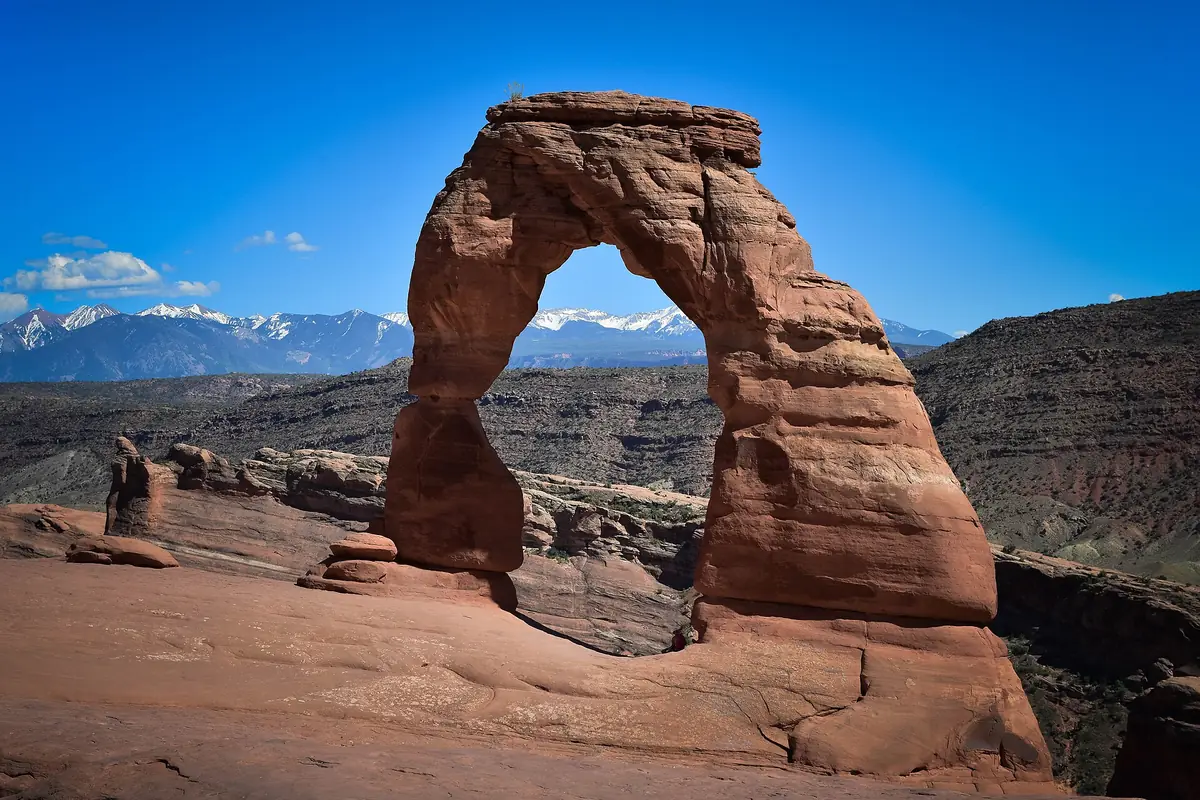
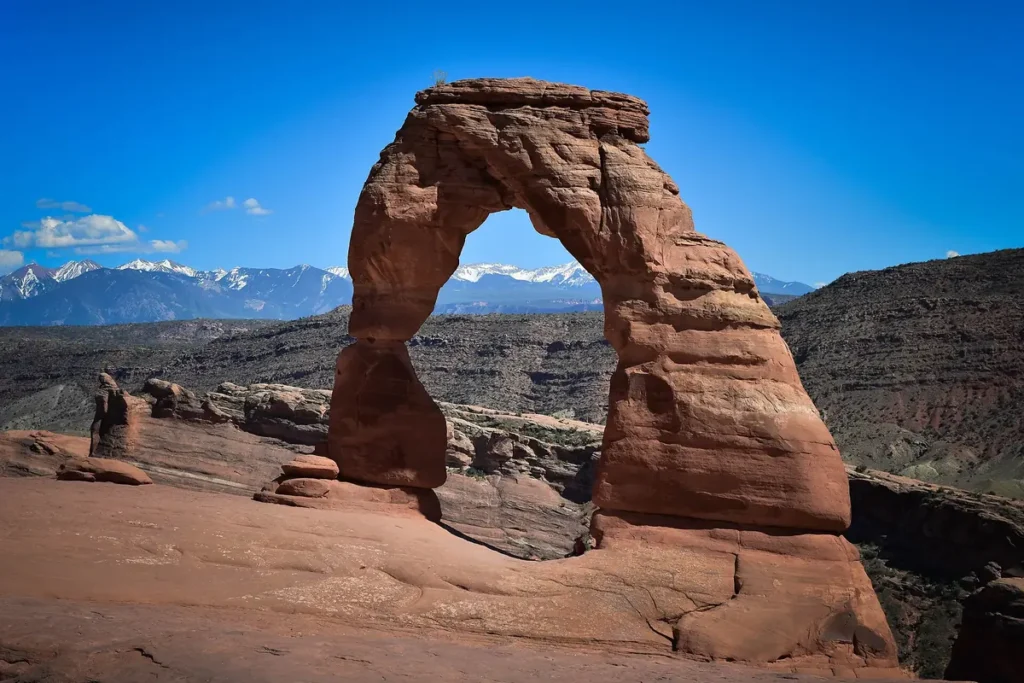
Arches in winter is the park at its most honest. The summer heat is gone, the entrance queues are gone, and the parking lots that fill by nine in the morning in April sit half empty. What remains is red rock under a low sun, snow dusting the fins after a storm, and the long quiet between one car and the next. The trade is real cold in the mornings, ice on the shaded slickrock, and days that end early. For most visitors that trade is a good one.
This guide covers the season as the National Park Service describes it, with temperatures, hours, and closures checked on 21 November 2026. It explains the scenic drive after snow, which hikes still work when the rock ices over, the Fiery Furnace and campground in the cold months, and how Moab changes when the crowds leave. Ourone day in Arches guide covers the same road in the busy season, and our best time to visit guide compares winter with the other months across all five parks.
The Short Answer: Is Arches Worth Visiting in Winter?
Yes, for most visitors, and more clearly than at any other Mighty 5 park. Arches in winter keeps everything that makes the park famous, and removes the two things that make summer hard work: the heat and the crowds. The scenic drive stays open between storms, the short trails to the Windows, Double Arch, and Balanced Rock stay walkable most days, and Delicate Arch can be hiked without sharing the bowl with a crowd. The light stays low and warm, the La Sal Mountains wear snow, and a dusting on the fins turns the park into a photograph.
Skip winter only if the trip depends on ranger-led programs or on the Fiery Furnace with a guide. The Park Service offers no ranger programs in winter, and ranger-led Fiery Furnace hikes run from spring through fall only. If those two things are the point of the trip, come in spring or autumn instead. For everyone else, winter is the easiest season to enjoy Arches on its own terms, and it needs no timed-entry reservation, which the park dropped for 2026.
Arches in Winter at a Glance
|
Month |
Average high |
Average low |
Days below freezing |
Snow |
Crowds |
|---|---|---|---|---|---|
|
December |
45 F |
23 F |
26 |
About 3.5 inches |
Quiet, busy around Christmas |
|
January |
44 F |
22 F |
28 |
About 2 inches |
The quietest month |
|
February |
52 F |
28 F |
22 |
About 1 inch |
Quiet, warming up |
The temperatures come from the National Park Service weather almanac for Arches, and the snowfall figures are the long-term NOAA normals for the park headquarters. The pattern surprises most first-time winter visitors. Afternoons in the mid 40s feel pleasant in the sun, and the cold arrives in the mornings and after sunset, when the lows sit in the low 20s and can drop below zero on the coldest nights. January holds the record low of minus 1 degree, and December has dropped to 5 degrees. Snow at park level is light, roughly eight inches across a whole average year, and it usually melts within a day or two on the sunlit rock.
Daylight is the real limit on a winter day. December averages about nine and a half hours, January about ten, and February about ten and a half. The sun sets early and the visitor center closes at 4:30, so the longest hike belongs in the middle of the day. Plan the drive and viewpoints for morning and late afternoon, when the low sun does its best work on the rock, and keep midday for Delicate Arch and Devils Garden.
What Winter Feels Like at Arches
Winter in this park is cold, dry, and changeable, in the Park Service’s own summary. The park sits in high desert country, where the temperature can swing more than 40 degrees in a single day, and the elevation makes the cold sharper than most visitors expect from southern Utah. The land rises from about 4,085 feet near the visitor center to 5,653 feet at Elephant Butte, so the far end of the park road runs colder than the entrance. A sunny afternoon at the Windows can feel warm enough for a single layer, while the shaded side of a fin holds ice from the same morning’s frost. The snow-capped La Sal Mountains dominate the horizon all winter while the park itself stays mostly dry, and a thin sheet of frozen meltwater on slickrock is more dangerous than six inches of fresh snow on a flat path.
Wind is the other winter factor visitors underestimate. The open desert between the fins offers no shelter, and a cold wind across the slickrock strips warmth fast, especially on the exposed Delicate Arch trail, which has no shade at all. Dress for wind as well as cold, carry water even though the air feels cool, and expect the weather to change between the entrance and Devils Garden. The dry air dehydrates quietly even in the cold, so the water and layers on ourUtah national parks packing list their place here as much as anywhere else on the trip.
Driving the Scenic Drive in Winter
Driving is how most winter visitors see Arches, and the drive is the simplest part of the season. There is no shuttle system in the park, so visitors drive themselves all year, and winter changes nothing except the road surface after a storm. The paved scenic drive runs 18 miles from the visitor center to Devils Garden, 36 miles round trip, and the drive end to end takes about 40 to 45 minutes without stops. The road climbs onto the plateau behind the visitor center, then runs north past Park Avenue, Balanced Rock, the Windows, the Delicate Arch turnoff, and the Fiery Furnace viewpoint before ending at Devils Garden.

After a snowfall, the park road may be closed for several hours while crews plow, and the Park Service says plainly that park roads, parking lots, and pullouts can still be icy, especially in shaded areas. The closure is usually measured in hours, not days, and the road reopens as the crews work through. Check at the visitor center for the latest road information before driving to the far end of the park, and check the Utah road conditions line or the state traffic site for the highways outside the park. The entrance sits five miles north of Moab on US 191, and the highway climb into the park is the stretch that ices first.
Parking is the one winter gift that changes the whole visit. In the busy season the lots at the Windows and the Delicate Arch trailhead fill early and the park may hold vehicles at the entrance until space frees up. In winter the lots are usually open and the visit runs on the visitor’s own schedule. If a lot is full, do not park on vegetation or block the road, because the fragile desert surface does not recover from tire tracks. Wait for a space, or come back later in the day.
The unpaved roads are a different matter, and winter makes them worse. Salt Valley Road and the other dirt roads can turn to four-wheel-drive conditions or become impassable after rain or snow, and the Park Service advises checking at the visitor center before setting out. Tower Arch, at the end of a dirt road in the Klondike Bluffs area, is the casualty of this rule in winter. The hike is a moderate 3.4-mile round trip, but the unpaved access road stops most winter visitors. Do not attempt the dirt roads in a rental sedan after a storm.
What Is Open and What Is Closed in Winter
The park itself never closes. Arches is normally open 24 hours a day, year-round, and the entrance fee applies at all hours. What changes in winter is everything around the edges: the visitor center hours shrink, the ranger programs stop, the campground switches to first-come, first-served sites, and the Fiery Furnace loses its ranger-led hikes. The table below gives the winter position as published by the Park Service, checked on 21 November 2026. Check the conditions page the night before and the morning of any winter visit.
|
Place or service |
Winter status |
Good to know |
|---|---|---|
|
Park, 24 hours |
Open year-round |
Entrance delays possible when lots fill |
|
Visitor center |
Open daily, 8:30 am to 4:30 pm, Nov 1 to Feb 28 |
Closed Dec 25; short hours Thanksgiving and Christmas Eve |
|
Ranger programs |
Not offered in winter |
No ranger-led hikes or campfire talks |
|
Ranger-led Fiery Furnace hikes |
Not offered in winter |
Spring through fall only |
|
Self-guided Fiery Furnace permits |
Available by advance reservation |
Reserve online 2 to 7 days ahead |
|
Devils Garden Campground |
Open year-round, first-come, first-served Nov 1 to Feb 28 |
24 winter sites, restrooms and drinking water |
|
Hiking trails |
Most remain open year-round |
Ice on shaded slickrock; traction devices recommended |
|
Unpaved roads |
Often 4WD or impassable after snow |
Check at the visitor center first |
|
Food, gas, lodging in the park |
None |
Aside from the visitor center and restrooms, no facilities |
|
Entrance fee |
$30 per private vehicle, valid 7 days |
No timed-entry reservation in 2026 |
The visitor center hours deserve a careful read, because an older Park Service winter page still floating around the web lists 9:00 am to 4:00 pm, and that page has not been refreshed since November 2025. The current operating hours page lists 8:30 am to 4:30 pm every day from November 1 through February 28, open 8:00 am to noon on Thanksgiving Day and Christmas Eve, and closed all day on Christmas Day. New Year’s Day, Martin Luther King Jr. Day, and Washington’s Birthday run the normal hours. Restrooms, drinking water, and the outdoor exhibits are available 24 hours a day, which matters for an early sunrise start.
The campground position is simpler than it looks, and it is one of the best winter deals in the park system. Devils Garden Campground is open year-round, it is the only campground inside the park, and reservations are required only from March 1 through October 31. From November 1 through February 28 the sites are first-come, first-served, and the Park Service FAQ lists 24 sites in that stretch, with restrooms and drinking water. Collecting wood is prohibited, and firewood can be bought at the visitor center or in Moab. A nightly fee applies and is paid through Recreation.gov, so check the payment method before arriving, because the campground has no staffed entrance in winter.
The Best Winter Hikes in Arches
Most hiking trails remain open year-round at Arches, and winter does not close them, it changes what they demand. The Park Service winter guidance is direct: after a snowfall, popular trails like Delicate Arch and Devils Garden quickly become slippery from packed snow and ice, traction devices and trekking poles are recommended, and drifting snow can cover trail markers, making even easy trails harder to follow. The visitor center displays updated photographs of trail conditions, so stop in before choosing the day’s longest hike. Our one day in Arches guide covers these trails in full for the other seasons.
|
Trail |
Distance (round trip) |
Time |
Ice risk |
Best for |
|---|---|---|---|---|
|
Balanced Rock loop |
0.3 miles |
15 to 30 minutes |
Low |
A first stop, all abilities |
|
Double Arch |
0.5 miles |
15 to 30 minutes |
Low |
The tallest arch, up close |
|
Windows loop |
1 mile |
30 to 60 minutes |
Low to moderate |
North and South Windows, Turret Arch |
|
Sand Dune Arch |
0.3 miles |
15 to 30 minutes |
Low |
Shade, soft sand, kids |
|
Broken Arch |
1.2 miles |
30 to 60 minutes |
Low to moderate |
A meadow walk to a quiet arch |
|
Park Avenue |
1.8 miles |
About 1 hour |
Moderate on the stairs |
Towering fins, the first trail |
|
Landscape Arch |
About 1.6 miles |
30 to 60 minutes |
Moderate |
The longest arch, an easy walk |
|
Delicate Arch |
3 miles |
2 to 3 hours |
High on slickrock and the ledge |
The famous arch, only with traction |
|
Double O Arch |
4 miles |
2 to 3 hours |
High past Landscape Arch |
Experienced hikers only in winter |
Delicate Arch: The Hike That Defines the Season
Delicate Arch is the hike that defines a winter visit, and it is the one where winter changes the risk rather than just the comfort. The trail runs 3 miles round trip from the Wolfe Ranch trailhead, takes 2 to 3 hours, and climbs 538 feet of open slickrock with no shade and some exposure to heights. The Park Service rates it strenuous, and the arch is not visible until the end, when the route follows a narrow rock ledge for about 200 yards and the bowl suddenly opens up. The opening beneath the arch measures 46 feet high and 32 feet wide, which makes it the largest free-standing arch in the park. Our Delicate Arch hike guide covers the full route, the Wolfe Ranch cabin, and the petroglyph panel at the start.
In winter, carry traction devices, because the Park Service says the ledge is often icy in winter and the slickrock slope freezes where the sun never reaches it. The shaded approach can stay icy long after the parking lot looks dry, and the sandstone turns slick where meltwater has refrozen overnight. Go in the late morning, wear the traction devices before the ledge starts, and turn back if the ledge is iced beyond what they can hold. The reward is the arch almost to yourself, with the snow-capped La Sals framed through the opening. Take at least 2 quarts of water per person even in the cold, because there is no drinking water at the trailhead.

The viewpoints offer the honest alternative on an icy day. The Lower Viewpoint is level and wheelchair-accessible at 200 feet round trip, and the Upper Viewpoint is a moderately strenuous half-mile round trip with 171 feet of climbing. On a day when the ledge is iced, the Upper Viewpoint is the right call. If the trailhead lot is full, the walk from the viewpoint adds a mile along the road each way, turning the hike into a 5-mile round trip.
The Windows, Double Arch, and Balanced Rock: The Easy Winter Core
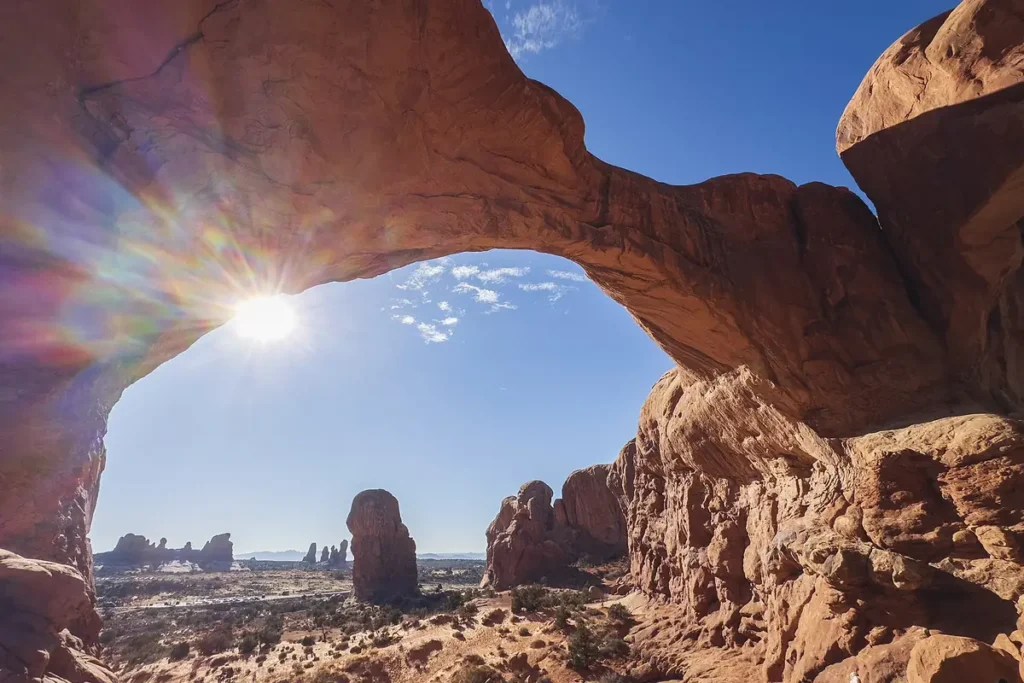
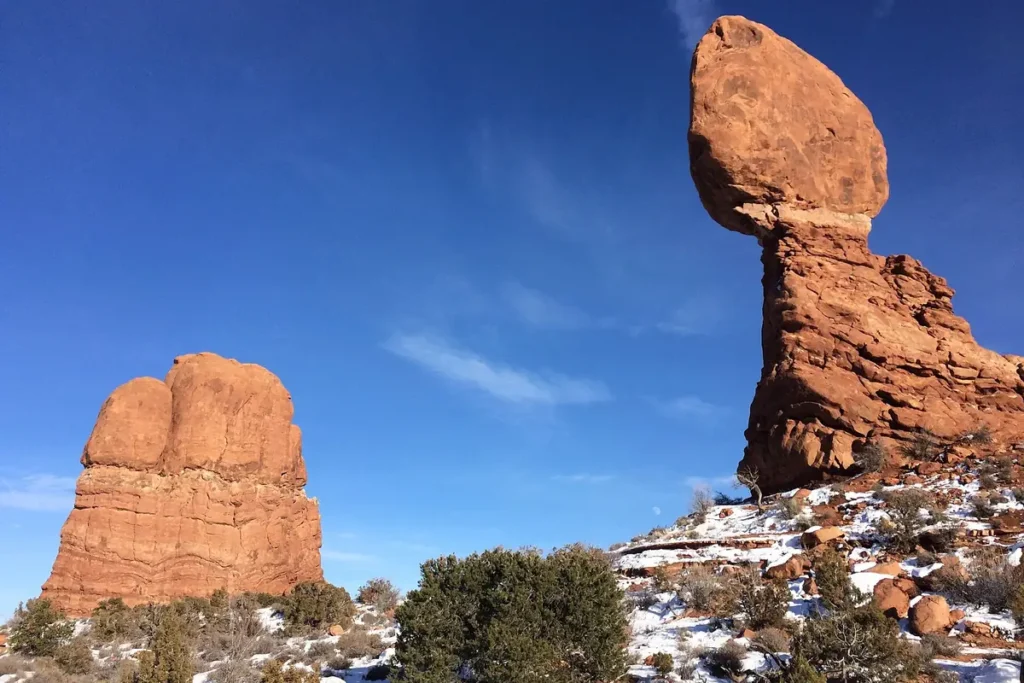
The Windows Section is the heart of a winter visit, and it is where the season feels easiest. The Windows loop runs about a mile round trip in 30 to 60 minutes, on a gentle gravel climb to the massive North and South Windows with Turret Arch between them. Double Arch sits in the same parking area, a flat half-mile round trip to the base of two giant spans joined at one end, and at 122 feet tall it is the tallest arch in the park. Balanced Rock, a few miles back down the road, offers a partly paved 0.3-mile loop around a 128-foot formation, with limited parking that is rarely a problem in winter.
These three stops work in winter because they are short, mostly flat, and close to the road, so the ice risk stays low and the cold never has time to bite. They also photograph beautifully in the low winter light, when the sun warms the rock face all day instead of beating down from overhead. The photograph below was taken on 31 December 2023, looking out from between the Double Arch pair, and it shows the winter light at its best. Our best arches besides Delicate Arch guide ranks these arches in full.
Park Avenue: The First Trail, At Its Quietest
Park Avenue is the first trail most visitors reach, and in winter it is often empty. The trail traces the bottom of a canyon lined with towering fins, then climbs rock-cut stairs to the Park Avenue Viewpoint, and the round trip runs 1.8 miles in about an hour with 322 feet of climbing, or much less if the stairs are skipped. The canyon walls block the morning sun, so the trail holds frost and ice longer than the open trails, and the stairs deserve respect on a cold morning. Walk it in the middle of the day, when the sun reaches the canyon floor, and hold the rails on the steps.
The trail rewards the effort with scale. The fins rise like a city skyline on both sides, and the Courthouse Towers stand at the far end of the canyon. In summer this trail is a furnace by ten in the morning, and in winter it is a cool, quiet canyon walk. The trailhead sits just past the visitor center, which makes it the natural first hike of the day.
Devils Garden and Landscape Arch: The Far End of the Road
Devils Garden, at the end of the 18-mile scenic drive, is the farthest the road goes, and in winter it feels like the end of the world in the best way. The trail to Landscape Arch is an easy, mostly flat walk on hard-packed ground, about 1.6 miles round trip in 30 to 60 minutes, and the arch is the longest in North America, with a light opening of 306 feet and a span only 6 feet across at its narrowest point. Large segments came crashing down in the 1990s, and the trail now stops at a fenced viewpoint, which is the right distance for a structure that thin. The trail past Landscape Arch continues toward Double O Arch, but it becomes difficult there, with rock scrambling, narrow ledges, and exposure to heights, and in winter that stretch is for experienced hikers with traction devices only.

The full Devils Garden trail runs 7.9 miles round trip in 3 to 5 hours, and it includes Landscape Arch, Double O Arch, the Dark Angel, and a primitive loop that demands route-finding across slickrock. In winter that loop is a serious undertaking, and drifting snow can cover the cairns that mark the route. Most winter visitors should walk to Landscape Arch, add the short spurs to Pine Tree Arch and Tunnel Arch if the ground is dry, and save the primitive loop for a dry day. Bring at least 3 quarts of water per person for the full loop, and at least 2 quarts for the walk to Double O Arch.
Sand Dune Arch and Broken Arch, on the way back from Devils Garden, are the gentle finish to a winter hiking day. Sand Dune Arch is a 0.3-mile round trip through deep sand to a secluded arch tucked between tall fins, and the shade that makes it a summer refuge makes it an icy pocket in winter, so watch the footing. Broken Arch runs 1.2 miles round trip across a meadow to an arch perched above pinon pine and juniper, and the trail can be extended through the arch to the campground. Both trails are easy, quiet, and close to the road, which is exactly what a short winter afternoon needs.
The Fiery Furnace in Winter
The Fiery Furnace is the one place in Arches where winter removes an option entirely. The Furnace is a maze of narrow fins and slot passages with no marked trail, and the only way to enter it is with a ranger-guided hike or an individual self-guided permit. Rangers normally offer Fiery Furnace hikes from spring through fall, and reservations are required, with no walk-up tickets. In winter there are no ranger-led hikes at all, which leaves the self-guided permit as the only way in.
The self-guided permit must be reserved online in advance, at least two days ahead and no more than seven days ahead, through Recreation.gov, and it costs $10 per person. The permit must be picked up at the visitor center the day before or the day of the hike, during winter hours, and it is valid for day use only, from sunrise to sunset. Children under five are not allowed in the Furnace, and an adult must accompany children aged twelve and under. The hike demands stamina and agility: irregular sandstone, narrow ledges above drop-offs, gaps to jump across, and places that require squeezing through and pulling up with hands and feet. Every participant must complete the hike once inside, because the maze has no early exit.
Winter adds two honest complications. The first is ice, because the shaded passages hold frozen meltwater and the sandstone turns slick, and the Park Service requires good hiking shoes or boots with gripping soles, with no sandals allowed. The second is daylight, because the permit covers sunrise to sunset and the Furnace takes hours to navigate, so a late start risks running out of light inside a maze with no trail. Go only on a dry day, with traction devices and a headlamp, and check the permit position on Recreation.gov before the trip, because winter permit availability is the one item in this guide that the Park Service pages do not spell out for the cold months. If the permit is not available, or the passages are icy, the Furnace viewpoint on the scenic drive still shows the fins from the road.
Photography and Light in Winter
Winter light is the quiet reason photographers return to Arches in the cold months. The sun stays low all day, so the rock faces glow warm from sunrise to sunset instead of washing out at noon, and the long shadows give the fins a depth that summer light flattens. The best hours are the first hour after sunrise and the last hour before sunset, when the light rakes across the Windows and the Courthouse Towers. Delicate Arch photographs best in the late afternoon, when the sun drops behind the arch and the La Sals fill the opening, and the Windows photograph best in the morning. Snow changes the photography as much as the light does. A dusting on the fins outlines every crack and ledge, and the contrast between white snow and red rock is the strongest color combination the desert offers. The snow melts fast on sunlit rock, so the best snow photographs come the morning after a storm, before the sun has had its way with the south-facing slopes. The shaded north-facing slopes hold their snow for days. Keep the camera batteries warm inside a jacket pocket, because cold drains them fast, and carry a lens cloth, because the fine desert dust sticks to a cold lens. Wear traction devices for the short walk from the car to a viewpoint, because the ground there can be a sheet of packed ice, and do not climb on any arch to get a photograph, because the Park Service prohibits climbing on any arch with an opening greater than three feet.
After Dark: Long Nights and Dark Skies
Arches is a certified International Dark Sky Park, designated on 5 July 2019, and winter is the best season to use that designation. The nights are the longest of the year, the air is dry and usually clear, and the early sunset means the stars are out before dinner is finished. The winter constellations ride high over the fins, the planets show clearly in the dark sky, and the Geminid meteor shower lights up the middle of December. The farther north the drive goes, away from the lights of Moab, the darker the sky becomes, and Devils Garden at the end of the road is the darkest easily reached spot in the park.
One honest note belongs here, because it saves disappointment. The bright Milky Way core that fills summer photographs is not visible in November, December, or January, because the core sits below the horizon in the winter months. Winter stargazing is about the sharp winter stars, the planets, and the meteors, not the galactic core. Bring a red flashlight to protect night vision, dress for ten degrees colder than the thermometer says, and let the eyes adjust for twenty minutes before judging the sky. Our Utah dark sky guide covers the best stargazing nights across all five parks.
The park’s 24-hour opening makes winter stargazing simple. There is no closing time to beat, no gate that locks at dusk, and no fee beyond the entrance pass. Drive in after dinner, park at the Windows or at Devils Garden, switch off the headlights, and wait. The cold is the only limit, because standing still under a clear winter sky chills faster than hiking does. Bring the warmest layer in the car, a blanket, and a thermos.
Moab in Winter: Where to Stay and Eat
Moab is the base for almost every winter trip to Arches, and winter changes the town in the visitor’s favor. The town sits five miles south of the park entrance on US 191, and it holds the hotels, restaurants, gas stations, and grocery stores that the park itself does not have. Winter is the quietest and cheapest season to book a room, and the restaurants that stay open serve without a wait. Some restaurants and businesses keep shorter winter hours, and a few close for weeks in January and February, so check opening times before counting on a specific place, especially for dinner on a weeknight.
The honest advice for winter lodging is to book a proper heated room rather than treating the trip as a camping adventure by default. Moab’s hotels cover every budget, and the winter rates soften the numbers in our Utah Mighty 5 trip cost breakdown. A warm room matters more at Arches than at the other Mighty 5 parks, because the park has no lodge inside its boundary, so there is no warm building to retreat to after a cold hiking day except the visitor center, which closes at 4:30. The room in Moab is the base camp, the drying room, and the hot shower, all in one.
Camping is the cheapest winter option and the coldest one, and it suits visitors who arrive prepared for it. Devils Garden Campground is the only campground inside the park, and in winter its first-come, first-served sites mean no reservation is needed, but also no guarantee of a site on a busy holiday weekend. Nighttime lows sit in the low 20s and can drop below zero, so winter camping needs a proper cold-weather sleeping setup, an insulating sleeping pad, and a tent that handles wind. The campground has restrooms and drinking water in winter, but no showers and no staffed entrance. Cabin and vacation rental options around Moab run quiet and affordable in the cold months for visitors who want a heated roof without a hotel price.
Food planning needs one firm rule. There is no food, gas, or lodging inside Arches, and the Park Service states plainly that aside from the visitor center and the restrooms, there are no facilities in the park. Fill the tank in Moab, buy food and water in town, and carry everything for the day into the park. The visitor center and the campground have drinking water, but no trailhead has a water source beyond those two points.
Planning Your Visit: Fees, Timed Entry, and Safety
The planning for arches in winter is simpler than for most national parks in one way, because there is no timed-entry reservation and no advance ticket for general entry. On 18 February 2026 the Park Service announced that Arches would not require advance timed-entry reservations in 2026, and visitors could enter at any time during operating hours. The timed-entry pilot that ran from 2022 through 2025 ended on 31 December 2025 and was not renewed for 2026. Nothing had been announced about 2027 when this guide was researched in November 2026, so a trip in January or February 2027 should be checked against the Park Service news page before the dates are fixed, because the 2026 position is not a promise about 2027.
The entrance fee is $30 per private vehicle, $25 per motorcycle, and $15 per person on foot or bicycle for visitors aged 16 and over, and the pass is valid for seven days. Visitors aged 15 and under enter free. The Arches Annual Pass costs $55, admits a private vehicle to Arches and Canyonlands plus Natural Bridges and Hovenweep, and is available to US citizens and residents only. The America the Beautiful pass is accepted, at $80 a year for US residents and $250 a year for nonresidents, and the current figures are on the NPS fees page. Arches does not charge the extra $100 per-person nonresident surcharge that Zion and Bryce Canyon introduced in 2026. The entrance station takes credit and debit cards only, so carry a card, and note that the Park Service listed free entrance days for US citizens and residents in 2026, including Presidents Day on 16 February, though the 2027 list had not been published at research time.
Water and safety planning follows the same rules as the rest of the desert, with a winter twist. Drinking water is available only at the visitor center and at Devils Garden Campground, so fill every bottle before hiking, and carry at least 2 quarts per person on the longer trails. Cell service is poor or absent in much of the park, so download offline maps before leaving Moab. Flash floods are the one serious danger that winter does not remove, because a storm miles away can send water into a wash with no warning at the trailhead, so never enter a wash or a narrow canyon if rain is forecast anywhere in the region.
Hypothermia deserves a plain mention, because winter visitors associate the desert with heat and forget the cold. The combination that causes trouble is wind, wet clothing, and a long stop in the shade, and the fix is layers, a windproof shell, and a dry spare layer in the pack. If the hands stop working properly, or the shivering becomes uncontrollable, get out of the wind, add layers, and head for the car. The Park Service responds to hundreds of search and rescue incidents in the park each year, and many involve visitors who underestimated the conditions.
What to Pack and Wear in Winter
Packing for Arches in winter is a layering problem, not a bulk problem. The mornings start near freezing, the afternoons warm into the 40s and low 50s, and the wind cuts through a single layer on the exposed slickrock. Dress in three layers: a moisture-wicking base layer, an insulating mid layer, and a windproof and water-resistant outer shell. Add a warm hat, gloves, and a neck gaiter, because the head and hands lose heat fastest when standing still at a viewpoint. Waterproof hiking boots with good grip are essential, because the slickrock is slippery when wet or icy, and the boots should be broken in before the trip.
Traction devices are the single most important winter item in the pack, and they belong on every hiker, not just the leader. The Park Service recommends traction devices and trekking poles for the icy trails, and the devices should be fitted before the icy sections start, not after the first slip. Carry at least 2 quarts of water per person, more for the Devils Garden loop, plus snacks, sunscreen, and lip balm, because the winter sun at altitude burns even on a cold day. A headlamp belongs in the pack even for a daytime hike, because the days are short and a slow return can run into dusk. Our Utah national parks packing list covers the full Mighty 5 kit, and the winter additions here are the traction devices, the windproof shell, and the warm hat and gloves.
For the car, the winter kit is short and non-negotiable. Check the tire tread and pressure before leaving Moab, keep the fuel tank at least half full, and carry a scraper, a shovel, blankets, and a charged phone. The park road is plowed after snow, but the pullouts are not always cleared as quickly, and a car that slides off the pavement onto the desert surface causes damage that takes years to heal. Drive slowly on the shaded stretches, where ice hides under a dusting of snow, and allow extra time for the drive to Devils Garden after a storm. If the road is closed for plowing, wait it out in Moab, because the closure is usually measured in hours.
Arches in Winter Checklist
- Check the NPS Current Conditions page and the NPS operating hours page before the trip, and check the visitor center board on arrival for road closures and trail condition photographs.
- Confirm the 2027 timed-entry position on the Park Service news page before fixing January or February dates, because the no-reservation rule announced in February 2026 covered 2026 only.
- Buy the $30 vehicle pass at the entrance station with a card, or bring the America the Beautiful pass, and remember that Arches charges no $100 nonresident surcharge.
- Pack traction devices for every hiker, three layers plus a windproof shell, waterproof boots, at least 2 quarts of water per person, and a headlamp, and keep the car kit ready for ice.
- Plan the longest hike for the middle of the day, arrive at the trailheads early, and expect the visitor center to close at 4:30 in the afternoon.
- Reserve a Fiery Furnace self-guided permit online 2 to 7 days ahead if the maze is on the plan, and pick up the permit at the visitor center the day before or the day of the hike.
- Do not count on ranger programs in winter, and do not plan a Fiery Furnace visit around a ranger-led hike until spring.
- Fill the tank and buy food and water in Moab, because there is no food, gas, or lodging inside the park.
- Stay after dark on a clear night for the dark skies, bring a red flashlight, and dress ten degrees warmer than the thermometer says.
- Never enter a wash or a narrow canyon if rain is forecast anywhere in the region, and turn back from any trail that is iced beyond what the traction devices can hold.
Frequently Asked Questions
Is Arches National Park open in winter?
Yes, Arches is normally open 24 hours a day, year-round, including Christmas Day and New Year’s Day. Winter weather does not close the park, but snow can close the park road for several hours while crews plow, and ice can make trails and pullouts slippery. The visitor center is open daily from 8:30 in the morning to 4:30 in the afternoon from November 1 through February 28, except for Christmas Day, when it is closed, and Thanksgiving Day and Christmas Eve, when it closes at noon.
Do I need a timed-entry reservation for Arches in winter?
No, not for 2026. The Park Service announced on 18 February 2026 that Arches would not require advance timed-entry reservations in 2026, and visitors could enter at any time during operating hours. The timed-entry pilot ran from 2022 through 2025 and ended on 31 December 2025. Nothing had been announced about 2027 when this guide was researched in November 2026, so check the Park Service news page before fixing a January or February 2027 trip. A valid entrance pass is still required, and reservations are still required for Devils Garden Campground in its reservable season and for Fiery Furnace hikes and permits.
How cold does Arches get in winter?
Daytime highs average 45 degrees in December, 44 degrees in January, and 52 degrees in February, and nighttime lows average 23 degrees in December, 22 degrees in January, and 28 degrees in February. December averages 26 days below freezing, January 28 days, and February 22 days. The Park Service describes the winter range more broadly as highs of 30 to 50 degrees and lows of 0 to 20 degrees, and the coldest nights can drop below zero. The higher ground at the far end of the park runs colder than the entrance, and the wind makes the cold feel sharper on the exposed slickrock.
Does it snow at Arches in winter?
Yes, but lightly. The park averages about eight inches of snow across a whole year, with about three and a half inches in December, two inches in January, and one inch in February, and the snow usually melts within a day or two on sunlit rock. Large snowfalls are uncommon in the park itself, though the La Sal Mountains hold deep snow all winter and wear a white cap that dominates the horizon. Even small amounts of snow or ice can make trails and roads impassable, the Park Service warns, because the danger is ice on shaded slickrock, not depth of snow. After a storm, the park road may close for several hours for plowing.
Can I hike Delicate Arch in winter?
Yes, and winter is one of the best times to hike it, with care. The trail runs 3 miles round trip, takes 2 to 3 hours, and climbs 538 feet of open slickrock, and it stays open all winter. The final ledge, about 200 yards long, is often icy in winter, and the Park Service says to carry traction devices for the shoes to cross the icy sections safely. Go in the late morning, wear the traction devices before the ledge, and turn back if the ledge is iced beyond what they can hold. The viewpoints offer the alternative on an icy day, with the Lower Viewpoint level and wheelchair-accessible and the Upper Viewpoint a half-mile round trip.
How much is the Arches entrance fee in winter?
The entrance fee is $30 per private vehicle, $25 per motorcycle, and $15 per person on foot or bicycle for visitors aged 16 and over, and the pass is valid for seven days. Visitors aged 15 and under enter free. The fee is the same in winter as in summer, and the entrance station takes credit and debit cards only. Arches does not charge the extra $100 per-person nonresident surcharge that applies at Zion and Bryce Canyon. The Arches Annual Pass costs $55 and covers Arches, Canyonlands, Natural Bridges, and Hovenweep for a year, for US citizens and residents.
The Bottom Line
Arches in winter is the park without the queue, and the season rewards the visitors who dress for it. The road stays open between storms, the short trails stay walkable most days, Delicate Arch waits almost empty at the end of its slickrock climb, and the low sun turns the whole park gold from morning to evening. The cold mornings, the short days, and the ice on the shaded rock are the price, and the price is fair. Dress in layers, carry traction devices, check the conditions page before every drive, and let the quiet do the rest.
Start with our one day in Arches guide for the full scenic drive plan in the busy season. Then read our Canyonlands vs Arches guide if the trip has room for a second park, and compare the cold season across the parks with our Bryce Canyon in winter guide and our Zion in winter guide.